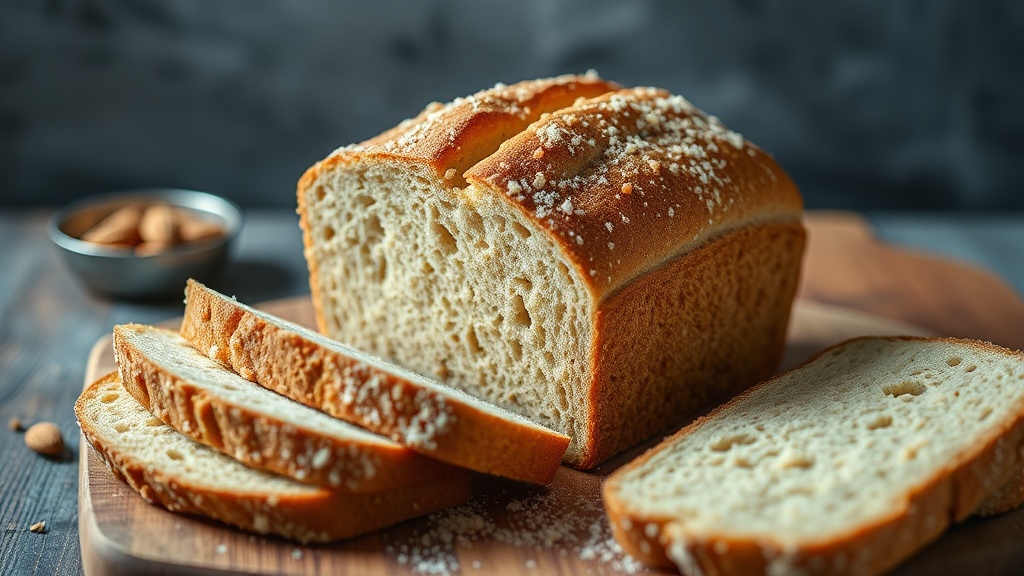
How to Make Perfect Keto Bread with Almond Flour

Finding a low-carb bread that actually holds a sandwich together without crumbling into a pile of almond meal is a common frustration. Most keto bread recipes result in something either too dense and "eggy" or far too fragile to toast. This guide provides a foolproof method for making a soft, structurally sound almond flour bread that mimics the texture of traditional sandwich bread. By focusing on the specific science of protein-to-fat ratios and the use of binding agents, you can create a loaf that works for avocado toast, grilled cheese, or even a simple breakfast sandwich.
The Science of Almond Flour Bread
Unlike wheat flour, which relies on gluten to create structure, almond flour is gluten-free and lacks the elastic proteins necessary for rising. Instead, we must rely on emulsification and structural binders. Almond flour is high in healthy fats and moisture-absorbing fibers, which means if you don't balance the liquid content, you end up with a heavy, oily brick. To achieve a "bread-like" crumb, we use eggs and a specific type of structural stabilizer.
The biggest mistake in keto baking is using "almond meal" instead of "almond flour." Almond meal is coarser and contains more bits of skin, which results in a gritty texture. For a smooth, professional-grade loaf, always use super-fine blanched almond flour. This ensures the crumb is tight and uniform rather than chunky and uneven.
Essential Ingredients and Tools
To make this recipe successfully, you need specific ingredients that provide both lift and stability. Using the wrong fat or a low-quality flour will change the outcome of your bake.
- Super-Fine Blanched Almond Flour: This is your base. Ensure it is finely ground to avoid a grainy mouthfeel.
- Large Eggs: These provide the protein structure. I recommend using room-temperature eggs to ensure the emulsion doesn't break when mixing with fats.
- Egg White Powder (Optional but Recommended): This is a professional secret. Adding a tablespoon of egg white powder significantly increases the structural integrity of the loaf, preventing it from collapsing after it leaves the oven.
- Xanthan Gum: This acts as your "gluten substitute." It provides the chewiness and elasticity that almond flour lacks on its own.
- Unsalted Butter or Coconut Oil: Using a solid fat that melts during baking helps create a soft crumb.
- Baking Powder: Ensure your baking powder is fresh. If it has been sitting in your pantry for over six months, it may not have the lifting power required for this dense batter.
For equipment, a standard 9x5 inch loaf pan works best. If you use a smaller pan, the batter may overflow due to the leavening agents. You will also need a stand mixer or a hand mixer; whisking this by hand often fails to incorporate enough air to give the bread its lift.
The Step-by-Step Method
1. Preparation and Preheating
Preheat your oven to 350°F (175°C). While the oven preheats, grease your loaf pan thoroughly. I recommend using a combination of butter and a light dusting of almond flour to prevent sticking. Even with parchment paper, keto breads tend to be "sticky" due to the high moisture content of the almond flour.
2. Mixing the Wet Ingredients
In a large mixing bowl, combine 4 large eggs, 1/2 cup of melted unsalted butter (cooled slightly), and 1/2 cup of warm water. Use your hand mixer to beat these ingredients for approximately 2 minutes. You want to see small air bubbles forming on the surface; this aeration is the first step in creating a light texture.
3. Incorporating the Dry Ingredients
Sift your almond flour, baking powder, salt, and xanthan gum together. Sifting is non-negotiable here. If you simply dump the almond flour into the wet ingredients, you will get clumps of dry flour that are impossible to work out later. Gradually add the dry mixture to the wet ingredients while mixing on a low speed. Increase the speed to medium for one minute to ensure the xanthan gum is fully hydrated and distributed.
4. The Baking Process
Pour the batter into your prepared loaf pan. Smooth the top with a spatula to create an even surface. Bake for 45 to 55 minutes. You will know it is done when the top is a deep golden brown and a toothpick inserted into the center comes out clean. If the top is browning too quickly, tent the pan loosely with aluminum foil for the final 15 minutes.
5. The Cooling Phase (Crucial Step)
Do not attempt to slice this bread while it is hot. This is the most common error in keto baking. Because the structure is still setting, slicing it early will result in a gummy, wet interior. Let the bread cool in the pan for 10 minutes, then transfer it to a wire cooling rack. Let it cool completely—at least one hour—before slicing. This allows the starches and proteins to fully firm up.
Troubleshooting Common Issues
If your bread didn't turn out as expected, it is likely due to one of these three factors:
The Bread is Too Dense or Gummy: This usually happens if you didn't incorporate enough air during the egg-beating stage or if you used too much water. Ensure your eggs are at room temperature, as cold eggs can cause the melted butter to seize, creating a heavy batter.
The Bread is Crumbly: If your loaf falls apart when you try to make a sandwich, you likely under-baked it or didn't use enough binder. If you find your keto bakes are often too fragile, you might want to check out my guide on why your keto almond flour cookies are too crumbly, as the principles of moisture and binding are very similar.
The Bread is Oily: This is a result of an emulsion break. If you add the melted butter to the eggs too quickly, the fat will separate. Always mix the eggs and water thoroughly before slowly drizzling in the fat.
Storage and Serving Suggestions
Because this bread lacks the preservatives found in commercial wheat bread, it has a shorter shelf life. For the best experience, store the loaf in an airtight container in the refrigerator for up to 5 days. If you want to keep it longer, slice the loaf and freeze it. This bread toasts beautifully; I recommend using a toaster or a pan with a little butter to revive the texture. A toasted slice provides a much better "crunch" that offsets the softness of the almond flour.
For a complete meal, use this bread as a base for savory dishes. It works exceptionally well for a keto version of French Toast (using a monk fruit sweetener) or as a side for a hearty soup. If you are looking for more ways to incorporate low-carb alternatives into your meals, see how you can swap pasta for zoodles to keep your macros in check while still enjoying satisfying textures.
Nutritional Profile (Per Slice)
Note: Nutritional values are estimates based on a standard 12-slice loaf.
- Net Carbs: 2g
- Protein: 4g
- Fat: 14g
- Fiber: 2g
By following these specific techniques—focusing on aeration, using super-fine flour, and allowing for a full cooling period—you can move away from the "weird" textures of many low-carb recipes and enjoy a loaf of bread that feels truly indulgent and satisfying.
Steps
- 1
Sift your dry ingredients to remove clumps
- 2
Whisk eggs and warm water to incorporate air
- 3
Fold the dry mixture into the wet ingredients gently
- 4
Bake in a preheated oven until golden and firm