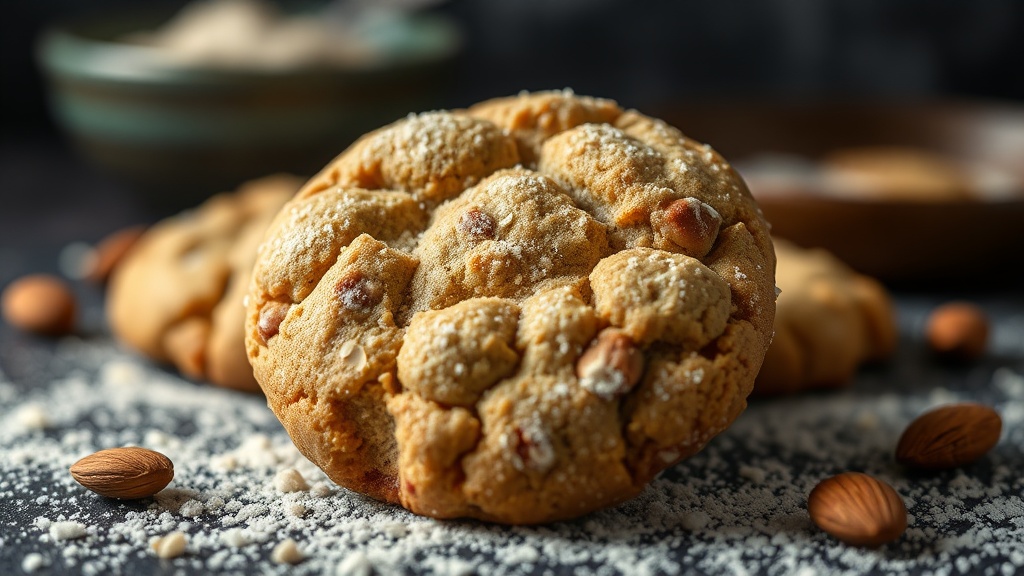
Why Your Keto Almond Flour Cookies Are Too Crumbly

You pull a tray of freshly baked almond flour cookies out of the oven, expecting a soft, chewy center. Instead, as soon as you try to lift one with a spatula, the cookie disintegrates into a pile of dry, sandy crumbs. This frustrating experience is common when working with grain-free, low-carb baking because almond flour lacks the structural proteins found in wheat. This guide explains the science behind why your keto cookies are falling apart and provides specific, actionable adjustments to ensure a cohesive, delicious result every time.
The Science of Structure in Grain-Free Baking
In traditional baking, wheat flour provides two essential components: starch for bulk and gluten for structure. Gluten is a protein network that acts like a web, holding ingredients together and allowing the dough to stretch without breaking. Almond flour, however, is primarily composed of fats and proteins with almost zero structural elasticity. When you remove the gluten, you lose the "glue" that keeps the cookie from crumbling.
Because almond flour is essentially ground nuts, it behaves more like a heavy, oily meal than a structural flour. Without a substitute for the binding properties of gluten, you must rely on alternative binders like eggs, starches, or gums to create a stable matrix. If your ratio of fat to protein is too high, or your moisture levels are too low, the cookie will lack the internal strength to hold its shape during and after the baking process.
The Three Main Culprits of Crumbly Cookies
1. Lack of Sufficient Binding Agents
The most frequent reason for a crumbling cookie is an insufficient amount of binder. In a standard recipe, eggs serve as the primary binder. In keto baking, the egg provides both moisture and protein. If you are using too many egg yolks and not enough whites, or if you are skipping eggs entirely in favor of a vegan substitute, you will likely end up with a crumbly mess. The egg white, specifically, contains albumin, which coagulates when heated, creating a structural framework for the cookie.
If you are following a recipe that uses only almond flour and a fat source (like coconut oil or butter), the dough will have no structural integrity. You must include a protein-rich binder to compensate for the lack of gluten. If your cookies are falling apart, try increasing the whole egg count by one or adding an extra egg white to the batter.
2. Improper Flour Texture and Quality
Not all almond flours are created equal. If you use "almond meal" instead of "super-fine almond flour," your texture will be significantly different. Almond meal is more granular and contains larger pieces of the almond skin, which makes the final product much more prone to crumbling. For a cohesive cookie, always look for "super-fine" blanched almond flour, such as the varieties produced by King Arthur Baking Company or Bob’s Red Mill.
Additionally, the moisture content of your flour matters. If your almond flour is older or has been stored in a warm pantry, the oils may have begun to go rancid or, more commonly, the flour may have absorbed ambient moisture. A "wet" or "clumpy" flour often results in a much more stable dough than a bone-dry, dusty flour. If your flour feels extremely light and airy, it might be too dry to bind effectively with your liquid ingredients.
3. The Fat-to-Flour Ratio Imbalance
Almond flour is naturally high in fat. When you add additional fats—such as melted butter, coconut oil, or heavy cream—you are increasing the weight of the dough without increasing its strength. If the ratio of fat to flour is too high, the fats will essentially "lubricate" the almond particles, causing them to slide past one another rather than sticking together. This results in a texture that is more like a shortbread or a sandcastle than a cookie.
This is a common issue when making keto-friendly versions of rich desserts. If you find your dough feels overly oily or greasy while mixing, you are likely dealing with an imbalance. This can also lead to issues with other keto bakes; for instance, if you struggle with heavy, oily textures in other areas, you might want to review why your keto cheese crust is always too greasy to understand how excess fat impacts structural integrity.
How to Fix Your Cookie Dough: Actionable Solutions
If you have a batch of dough that looks a bit too loose or fragile, do not discard it. Use these professional techniques to stabilize the mixture before it hits the oven.
Add a Hydrocolloid (Gums and Starches)
To mimic the "stretch" of gluten, you can add small amounts of gums or keto-friendly starches. Xanthan gum or guar gum are the goldants of the keto baking world. They act as thickeners and stabilizers. Adding just 1/4 to 1/2 teaspoon of xanthan gum to your dry ingredients can significantly improve the cohesion of the dough. These gums absorb moisture and create a gel-like structure that holds the almond particles together.
- Xanthan Gum: Best for creating a "chewy" texture.
- Psyllium Husk Powder: Excellent for adding bulk and a more "bread-like" structure, though it can add a slight earthy flavor if overused.
- Glucomannan (Konjac Root): A very strong binder that works well in small amounts to prevent crumbling.
Incorporate More Protein
Since protein is the building block of structure, increasing the protein content can help. If your recipe calls for almond flour and butter, try replacing a portion of the flour with a high-quality protein powder (like whey isolate or collagen peptides). Collagen peptides, in particular, are excellent for keto baking because they dissolve easily and provide a subtle binding effect without changing the flavor profile significantly.
Adjust Your Cooling Technique
Sometimes, the cookie isn't actually "broken"—it is just too soft. Almond flour cookies are incredibly fragile when they are hot. Because they lack a rigid gluten structure, they rely on the setting of the fats and proteins to hold their shape. If you try to move a cookie too early, it will inevitably crumble.
The Rule of Thumb: Let your cookies cool completely on the baking sheet for at least 15 to 20 minutes before attempting to move them. If you are making a soft-style cookie, let them cool to room temperature or even chill them in the refrigerator. The fats in the almond flour and butter need to solidify to provide the necessary structural support.
Troubleshooting Guide: Common Texture Issues
Use this quick reference guide to diagnose your cookie's texture issues before your next baking session.
| Texture Symptom | Likely Cause | The Fix |
|---|---|---|
| Gritty or Sandy | Using almond meal instead of fine flour. | Switch to super-fine blanched almond flour. |
| Falls apart when warm | Insufficient binder (eggs or gums). | Add an extra egg white or 1/4 tsp xanthan gum. |
| Oily/Greasy feel | Too much fat or over-mixing. | Reduce butter/oil; do not over-mix once oil is added. |
| Too dense/Heavy | Too much moisture or too many eggs. | Reduce egg yolk count or slightly increase dry ingredients. |
Pro-Tips for Perfect Keto Cookies
To move from "surviving" keto baking to actually enjoying it, implement these three professional habits:
- Measure by Weight, Not Volume: A "cup" of almond flour can vary wildly depending on how tightly it is packed. Use a digital kitchen scale to measure your flour in grams. This ensures consistency across different batches.
- Sift Your Dry Ingredients: Even with high-quality flour, small clumps can form. Sifting your almond flour, sweetener (like erythritol or monk fruit), and xanthan gum together ensures an even distribution of binders, preventing "weak spots" in your cookies.
- Temperature Control: Ensure your butter and eggs are at the temperature specified in the recipe. If a recipe calls for room temperature eggs and you use cold ones, the fat in the butter may seize, creating an uneven, crumbly dough.
Baking with almond flour requires a shift in mindset. You are no longer relying on gluten for strength; you are building a structure out of protein and moisture. By focusing on the quality of your flour, the ratio of your binders, and the patience of your cooling process, you can create keto treats that are as structurally sound as they are delicious.