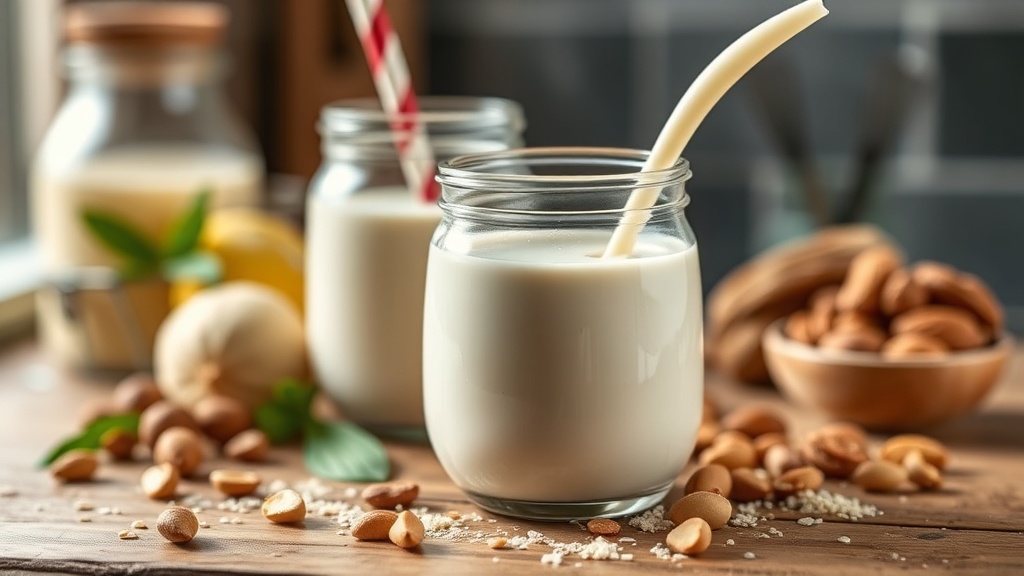
How to Make Your Own Nut Milk at Home

A grocery store shopper stands in the dairy aisle, staring at a carton of almond milk. They notice the ingredient list: water, almond base, carrageenan, and a heavy dose of cane sugar. They want a lower-carb option that doesn't rely on thickeners or artificial sweeteners, but the "unsweetened" versions often feel thin and watery. This guide explains how to make your own nut milk at home to ensure you control the ingredients, the thickness, and the nutritional density.
Making nut milk at home is one of the simplest ways to manage your carbohydrate intake and avoid the hidden additives found in commercial brands. When you buy pre-packaged nut milk, you are often paying for water and stabilizers like guar gum or xanthan gum. By making it yourself, you can control the ratio of nuts to water, allowing you to create a creamy liquid that works perfectly in coffee, smoothies, or even as a base for creamy nut-based sauces. This process is efficient, cost-effective, and provides a much higher concentration of healthy fats and protein than the diluted versions found on supermarket shelves.
Essential Equipment and Ingredients
You do not need a specialized nut milk maker to achieve professional results. Most of the tools required are likely already in your kitchen. To get the best texture, focus on high-quality tools and fresh ingredients.
The Tools
- High-Speed Blender: A Vitamix or Blendtec is ideal for breaking down the cell walls of the nuts, resulting in a smoother liquid. However, a standard upright blender will work if you blend for a longer duration.
- Nut Milk Bag: This is a fine-mesh nylon bag. It is superior to cheesecloth because the weave is tighter, ensuring you catch even the smallest particles of nut pulp.
- Fine-Mesh Strainer: Useful for a secondary strain if you are not using a nut milk bag.
- Glass Storage Jar: A Mason jar or a glass pitcher with a tight-fitting lid is best for storage. Glass helps maintain freshness and prevents any plastic odors from affecting the taste.
The Ingredients
The quality of your milk depends entirely on the quality of your nuts. For a low-carb, high-fat profile, focus on these options:
- Almonds: The most versatile base. Raw almonds provide a neutral flavor profile.
- Macadamia Nuts: These are incredibly high in monounsaturated fats and produce a very rich, creamy milk that is excellent for keto-friendly diets.
- Cashews: Note that cashews have a slightly higher carbohydrate count than almonds or macadamias, but they produce the creamiest texture without any additives.
- Hazelnuts: Great for adding a distinct, nutty flavor to coffee or morning oats.
- Filtered Water: Always use filtered or spring water. Since water is the primary ingredient, using tap water with high chlorine levels can alter the flavor of your milk.
The Step-by-Step Process
The secret to great nut milk is the "soak and rinse" method. This step is non-negotiable if you want a smooth texture and easier digestion.
Step 1: Soaking the Nuts
Soaking serves two purposes: it softens the nuts for a smoother blend and neutralizes phytic acid, which can make nutrients harder for your body to absorb. For almonds or macadamias, soak them in filtered water for 8 to 12 hours (overnight is easiest). If you are in a hurry, you can use very hot water to soak them for 1 to 2 hours, but the long soak yields a much creamier result.
Pro Tip: Add a pinch of sea salt to the soaking water to help break down the proteins. Once the time is up, drain the soaking water and rinse the nuts thoroughly under cold running water. Do not use the soaking water for blending, as it contains the impurities you want to remove.
Step 2: Blending
The ratio of nuts to water determines the thickness of your milk. For a standard "drinking" consistency, use a ratio of 1 cup of soaked nuts to 3 or 4 cups of filtered water. If you want a heavy cream consistency for cooking or coffee, use a 1:2 ratio.
- Place the soaked and rinsed nuts into your blender.
- Add the filtered water.
- Blend on high speed for at least 60 to 90 seconds. If you are using a standard blender, you may need to blend for 2-3 minutes to ensure the liquid is as smooth as possible.
Step 3: Straining
Hold your nut milk bag or fine-mesh strainer over a large bowl. Pour the blended mixture into the bag. Use your hands to squeeze the bag firmly to extract every last drop of liquid. This is where you get that concentrated "cream" from the pulp. Be thorough; the more you squeeze, the more yield you get.
Step 4: Flavoring (Optional)
Since you are making this for a low-carb or specialty diet, avoid refined sugars. Instead, consider these additions during the blending stage:
- Vanilla Extract: A few drops of pure vanilla extract add depth without adding carbs.
- Ceylon Cinnamon: Excellent for blood sugar regulation and adds a warm flavor.
- Sea Salt: A tiny pinch of high-quality salt (like Maldon or Himalayan pink salt) enhances the natural nuttiness.
- Cocoa Powder: Add unsweetened organic cacao powder for a homemade chocolate nut milk.
Variations and Troubleshooting
Once you master the basic almond or macadamia milk, you can experiment with different profiles. Understanding the science of the ingredients will help you troubleshoot common issues.
Making "Cream" vs. "Milk"
If you want to make a heavy cream for whipping or for making sauces, simply reduce the water. A 1:1 ratio of nuts to water creates a thick, luscious cream. This is a great way to incorporate high-quality fats into your cooking without relying on heavy dairy. This homemade cream is much more stable than store-bought versions that use thickeners.
Common Issues
The milk is too thin: You likely used too much water or didn't blend long enough. To fix this, blend a small amount of the leftover nut pulp with a little water and then stir it back into your main batch.
The milk feels "gritty": This is usually a sign that the nuts weren't soaked long enough or the blender wasn't powerful enough. Ensure you are using a high-speed blender and consider a secondary strain through a very fine cloth.
The milk separates: This is completely natural. Because you aren't using emulsifiers like carrageenan or lecithin, the fats and water will naturally separate over time. Simply shake the jar before each use to reintegrate the liquids.
Storage and Shelf Life
Because homemade nut milk does not contain preservatives, it has a much shorter shelf life than commercial versions. This is the trade-off for eating clean, additive-free ingredients.
Store your nut milk in a clean, airtight glass jar in the refrigerator. It will typically stay fresh for 3 to 5 days. To extend the life of your milk, ensure your jar is sterilized with boiling water before filling it. If you notice a sour smell or any change in color, discard it immediately. To prevent premature spoilage, do not pour the milk directly from the large storage jar into your coffee mug; instead, pour the amount you need into a separate small vessel. This prevents introducing bacteria from the coffee or tea into the main batch.
If you find you have made a large batch that you cannot finish in five days, you can freeze it. Pour the milk into silicone ice cube trays. Once frozen, transfer the cubes to a freezer bag. These "milk cubes" can be dropped directly into hot coffee or blended into smoothies, providing a convenient way to use your homemade stock without waste.
Nutritional Comparison
When you compare homemade nut milk to the standard carton, the nutritional density is significantly higher. A standard store-bought almond milk is often 98% water. While this is fine for low-calorie diets, it offers very little satiety. By controlling the ratio, your homemade version provides more magnesium, vitamin E, and healthy fats. This makes it a much more effective tool for managing energy levels throughout the day, especially when you are following a lower-carbohydrate lifestyle where nutrient density is key.
Steps
- 1
Soak your nuts in water overnight
- 2
Drain and rinse the nuts thoroughly
- 3
Blend with fresh water until completely smooth
- 4
Strain the mixture through a nut milk bag