Women Who Changed My Kitchen: Low-Carb Recipes for International Women's Day

March 8 is three days away, and every brand in my inbox is selling me something pink.
I'm going to do the opposite.
International Women's Day, to me, is actually about learning. It's about naming the specific women whose work made your own life different. Not "women are amazing" (they are). Not "shop these female-founded brands" (fine, whatever). But: these exact women changed how I think about food, and here's what I learned from them.
When I was 26 and first diagnosed with PCOS, I went down a rabbit hole that took me through a lot of bad content before I found the good stuff. A lot of what I found felt like it had been filtered through frameworks that didn't quite match my reality — low-calorie, low-fat, generic "clean eating." The women who combined clinical rigor with cultural reality and actual edibility were harder to find. But I found them.
Today I want to talk about three of them. I've been referencing their work for years. And I've built a recipe into each section that reflects something specific I learned from each one.
Medical disclaimer: I'm a registered dietitian, but I'm not your dietitian. If you have PCOS, diabetes, or take any medication that affects blood sugar, please consult your own RD or physician before making major dietary changes. This post is informational, not a treatment plan.
1. Dr. Angela Grassi, MS, RDN — The PCOS Nutrition Center
Who she is: Angela Grassi is the founder of The PCOS Nutrition Center, and she has PCOS herself — which matters. She's written multiple clinical guides, including The PCOS Workbook and PCOS: The Dietitian's Guide, and she's been a dedicated PCOS nutrition specialist for well over a decade.
What she changed for me: Before finding Angela's work, I thought PCOS dietary management was just "eat less sugar." It is not. Her work helped me understand that it's about glycemic load across the whole day — not one villain food, but patterns. Protein at breakfast. Fiber with every carb source. And crucially: the insulin-androgen connection in PCOS is well-documented in the research literature, and it responds to specific dietary patterns, not generic clean eating. (If you want to go deep on the mechanism, look up work on insulin-sensitizing diets and hyperandrogenism in PCOS — there's a solid body of evidence.)
She also writes in a way that doesn't make you feel broken. That's rarer than it should be.
The recipe she inspired:
Carne Asada & Egg Breakfast Bowl
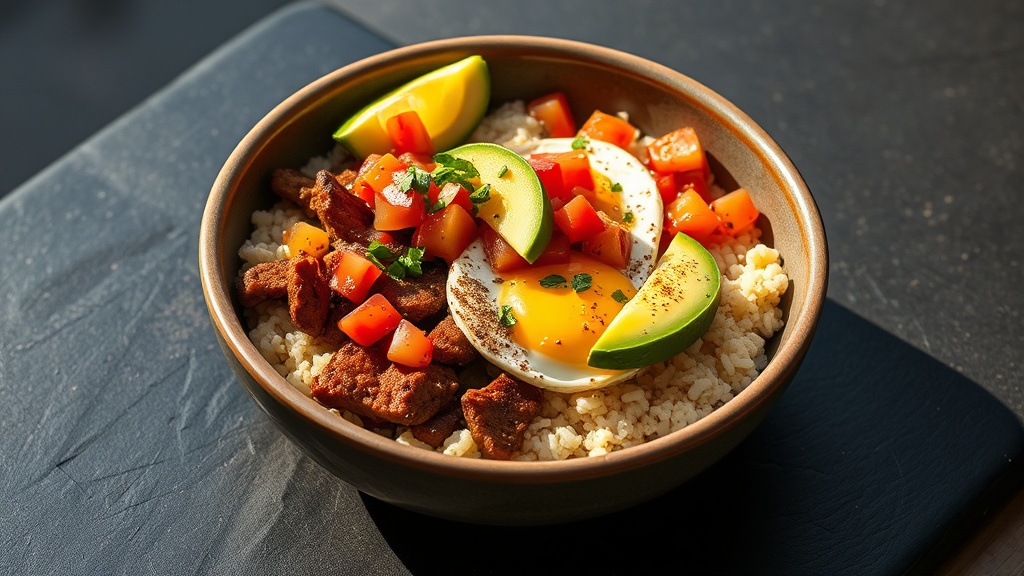
The principle here is straight out of Angela's playbook: 25–30g protein within 30–60 minutes of waking, with fiber and fat to slow glucose entry. This is also just a really good breakfast.
Serves: 2
Time: 20 minutes
Ingredients:
- 6 oz skirt steak, sliced thin (or use leftover carne asada)
- 4 large eggs
- 1 cup cauliflower rice (fresh or frozen)
- ½ cup pico de gallo
- ½ avocado, sliced
- 1 tbsp avocado oil
- 1 tsp cumin
- ½ tsp garlic powder
- Salt and lime to taste
- Fresh cilantro
Instructions:
- Season steak with cumin, garlic powder, salt. Heat oil in a cast iron pan over high heat. Sear steak 2–3 minutes per side. Rest, then slice thin.
- In the same pan, drop heat to medium. Add cauliflower rice, press into the pan, and let it sit 3–4 minutes without stirring (you want some char, not steam).
- Push cauli-rice to the side. Scramble eggs directly in the pan, pulling them off heat just before they're done. They'll finish cooking.
- Plate: cauli-rice base, steak on one side, soft scramble on the other. Top with pico, avocado, cilantro, and a heavy squeeze of lime.
Maya's note: I make a double batch of carne asada on Sunday specifically so Monday morning breakfast takes four minutes. If you're using frozen cauliflower rice, squeeze it in a towel first — otherwise you get a wet mess, not a crispy base. The char on the cauli is non-negotiable.
Macro breakdown (per serving, estimated via USDA data):
| Net Carbs | Protein | Fat | Fiber | |
|---|---|---|---|---|
| Carne Asada & Egg Breakfast Bowl | 5g | 36g | 26g | 4g |
2. Iliana de la Vega — El Naranjo, Austin, TX
Who she is: Chef Iliana de la Vega is a James Beard Award semifinalist and the owner of El Naranjo restaurant in Austin. She was born in Mexico City and trained in Oaxacan cuisine — the moles, the chiles negros, the tlayudas, the whole complex regional tradition that most people in the US have never tasted because "Mexican food" at the national chain level is a flattened thing.
What she changed for me: Iliana's philosophy — that authentic Mexican cooking is inherently ingredient-forward, that the flavor comes from chiles and technique and time, not from cheese and flour — completely shifted how I approach Tex-Mex adaptation. When you understand that a real mole negro gets its depth from 20+ dried chiles and toasted seeds, not from a packet, you realize the cuisine already has everything it needs. I'm not stripping things out when I go lower-carb. I'm going back to a foundation.
She also pushes back — gently, with evidence — on the gatekeeping that says traditional food can't be modified. Adaptation is Mexican cooking history. It always has been.
The recipe she inspired:
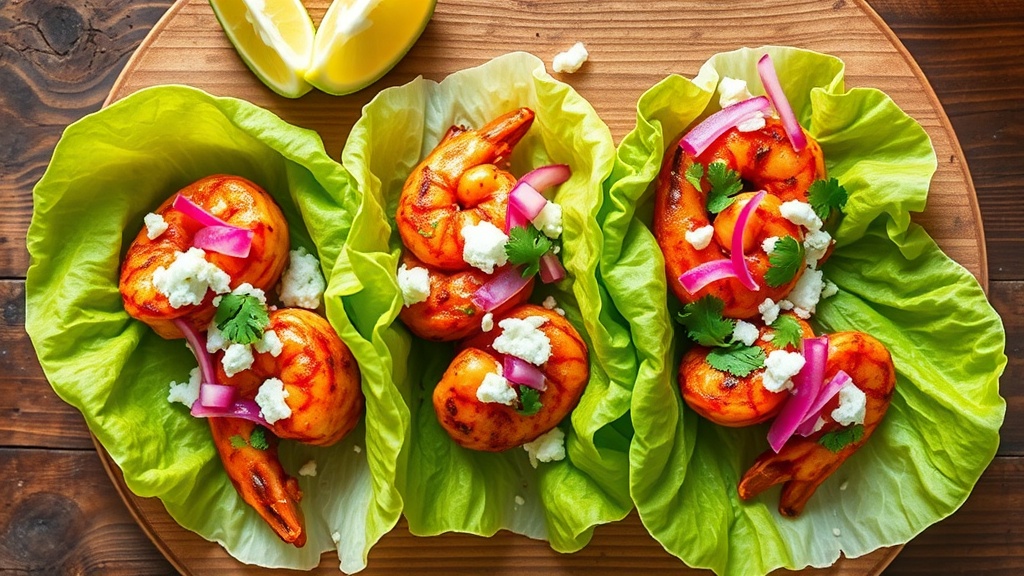
Guajillo-Lime Shrimp Lettuce Tacos
Guajillo chiles have a bright, slightly fruity heat — nothing like the canned red sauce on Tex-Mex combos. Rehydrating them yourself takes five minutes and tastes like an entirely different ingredient. These tacos are what I make when I want something that feels like an event but takes 20 minutes.
Serves: 2 (4 tacos each)
Time: 20 minutes
Ingredients:
- 1 lb large shrimp, peeled and deveined
- 3 dried guajillo chiles, stems and seeds removed
- 3 cloves garlic
- 2 tbsp lime juice (plus extra for serving)
- 1 tbsp olive oil
- 1 tsp cumin
- ½ tsp Mexican oregano (regular oregano works, but find the Mexican stuff — it's worth it)
- Salt to taste
- 8 large butter lettuce leaves
- 3 tbsp crumbled cotija cheese
- Pickled red onions (store-bought or quick-pickled)
- Fresh cilantro, extra lime
Instructions:
- Toast guajillo chiles in a dry pan 30 seconds per side — just until fragrant. Don't burn them. Transfer to a bowl, cover with boiling water, and let rehydrate 10 minutes.
- Drain chiles (save ¼ cup soaking liquid). Blend with garlic, lime juice, cumin, oregano, and 2–3 tbsp soaking liquid until smooth. Thin with more liquid if needed.
- Toss shrimp in the guajillo marinade. Let sit 5 minutes.
- Heat olive oil in a skillet over medium-high. Cook shrimp 2 minutes per side until just pink. Don't crowd the pan — do two batches if needed.
- Serve in butter lettuce cups with cotija, pickled onion, cilantro, and lime.
Maya's note: Pickled red onions are my desert island condiment. One jar lasts a week in the fridge and goes on absolutely everything. To quick-pickle: thin-sliced red onion + ½ cup red wine vinegar + 1 tsp salt + a pinch of sugar. Rest 30 minutes, done.
Macro breakdown (per serving, 4 tacos, estimated via USDA data):
| Net Carbs | Protein | Fat | Fiber | |
|---|---|---|---|---|
| Guajillo-Lime Shrimp Lettuce Tacos | 5g | 43g | 17g | 2g |
3. Franziska Spritzler, RD, CDE — The Low-Carb Dietitian
Who she is: Franziska Spritzler is a registered dietitian and certified diabetes educator who has been writing about low-carb nutrition for over a decade. She's the author of The Low-Carb Dietitian's Guide to Health and Beauty, and her website has been a quiet resource for years — evidence-based, calm, and notably free of the "CARBS ARE POISON" energy that makes most low-carb content exhausting.
What she changed for me: Franziska writes like someone who has actually sat across from patients and heard their objections. Her content on why low-carb can work for PCOS — specifically around insulin reduction, androgen levels, and cycle regularity — is some of the clearest clinical communication I've personally come across. She also talks about sustainability in a way that doesn't minimize how hard dietary change is. No toxic positivity. Just "here's the mechanism, here's the evidence, here's how to do it without hating your life."
She's also one of the few low-carb RDs who explicitly says this approach isn't right for everyone. That kind of intellectual honesty builds trust.
The recipe she inspired:
Bacon-Wrapped Jalapeño Chicken Thighs
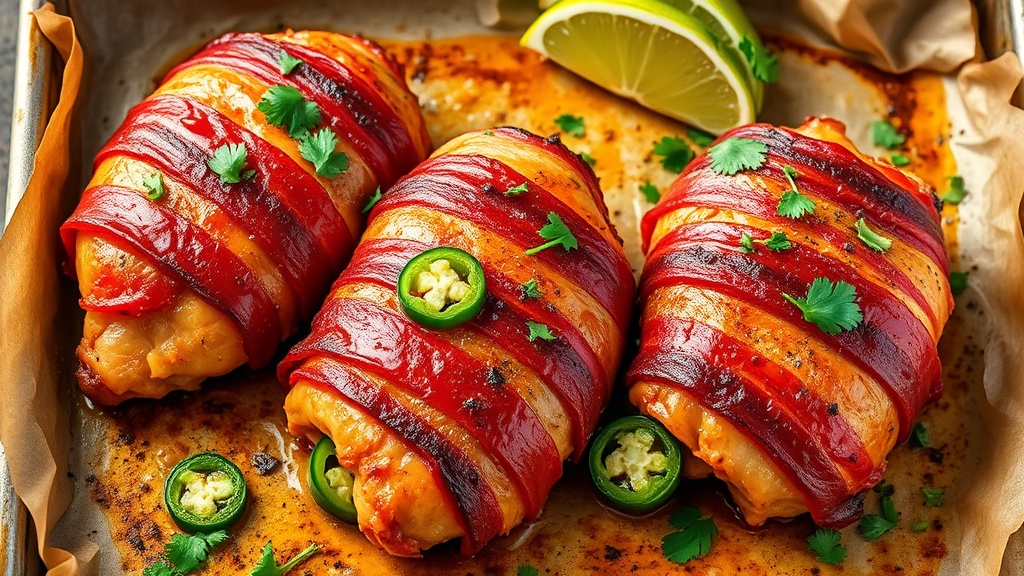
Franziska's work emphasizes that low-carb eating doesn't have to be complicated — and that fat is not the enemy the 1990s told us it was. This recipe has four main ingredients plus spices and zero cleanup if you line the pan. It is not trying to be anything other than extremely good dinner.
Serves: 4
Time: 10 min prep + 25 min oven
Ingredients:
- 4 boneless, skinless chicken thighs (about 5 oz each)
- 4 strips thick-cut bacon
- 2 jalapeños, sliced into thin rounds
- 2 cloves garlic, minced
- 1 tsp smoked paprika
- ½ tsp cumin
- Salt and black pepper
- Lime for serving
Instructions:
- Preheat oven to 425°F. Line a rimmed baking sheet with foil.
- Pat chicken dry. Mix garlic, smoked paprika, cumin, salt, and pepper. Rub over both sides of each thigh.
- Layer jalapeño slices on top of each thigh. Wrap one strip of bacon around each piece — not too tight, let it breathe.
- Place seam-side down on the baking sheet.
- Roast 22–25 minutes until bacon is crispy and chicken registers 165°F internal.
- Rest 5 minutes. Serve with lime wedges.
Maya's note: I add more jalapeños than this recipe says. You should too. If you're cooking for someone who doesn't like heat, use mini bell peppers instead — same vibe, zero burn. Diego eats these without comment, which in my house means they've passed the highest possible quality control test.
Macro breakdown (per serving, 1 thigh, estimated via USDA data):
| Net Carbs | Protein | Fat | Fiber | |
|---|---|---|---|---|
| Bacon-Wrapped Jalapeño Chicken Thighs | 1g | 32g | 14g | 0g |
That's What IWD Looks Like in My Kitchen
Not a shopping guide. Not a generic empowerment playlist. Just three women who did real work — clinical, culinary, cultural — and whose names I actually type into search bars when I need to think something through.
Angela built a clinical framework for PCOS nutrition in a language real people can actually use. Iliana is protecting a food tradition by going back to its actual foundations. Franziska is giving people evidence and letting them make their own decisions without drama.
That's worth more than a pink banner.
If you make any of these recipes this week, I hope they hit. And if you have a woman in your food life — an RD, a cookbook author, a grandmother with a tamale recipe she guards like a state secret — give her her flowers this Sunday. Named and unnamed.
Happy eating.
— Maya
Carb Conscious is written by Maya Reyes, RD. For personalized nutrition advice, please consult your own registered dietitian or physician.