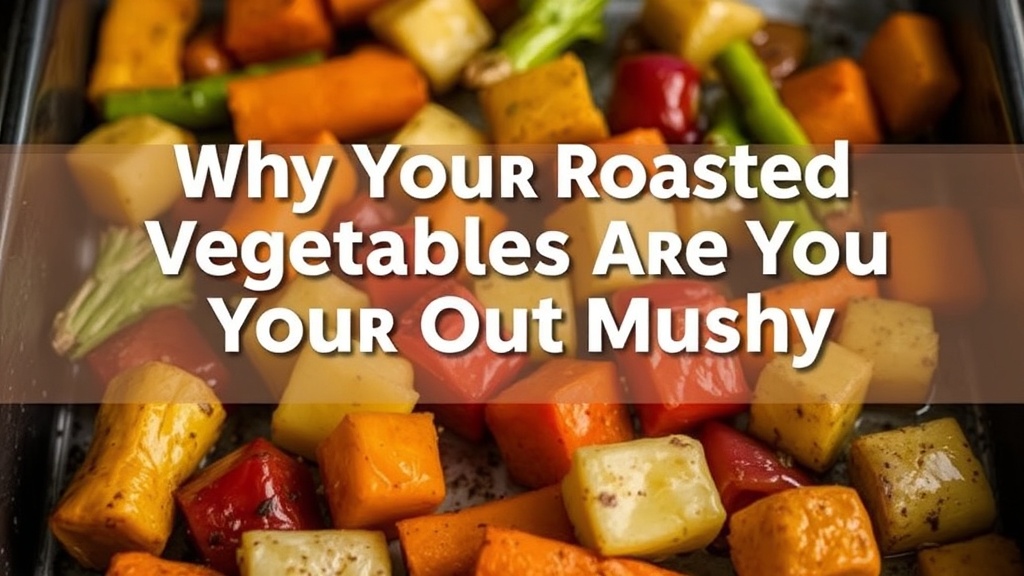
Why Your Roasted Vegetables Are Coming Out Mushy

You pull the heavy baking sheet out of the oven, expecting the golden-brown, crispy edges of roasted cauliflower or charred Brussels sprouts, but instead, you find a pile of limp, grey, translucent vegetables. This mushy texture is a common frustration, especially when you are trying to lean into a lower-carb lifestyle where vegetables are your primary source of volume and nutrients. This guide explains exactly why your roasted vegetables are losing their structural integrity and provides the technical adjustments needed to achieve that much-desired caramelized crunch.
The Science of Moisture and Heat
The fundamental reason vegetables turn to mush is excess moisture. Vegetables are composed mostly of water, and roasting is essentially a process of evaporating that water while simultaneously biling the internal structure through heat. If the water cannot escape efficiently, it turns the vegetable into a steamed, soggy mess rather than a roasted, crispy one. This is particularly problematic for high-fiber, low-carb staples like broccoli, cauliflower, and zucchini, which have high water content.
When you roast at a temperature that is too low, you are essentially "cooking" the vegetable through rather than "searing" it. Low temperatures (under 400°F) allow the cellular walls to soften and collapse before the surface can dehydrate and brown. To get a successful roast, you need high, dry heat to create a thermal gradient—a difference between the hot, crispy exterior and the tender, cooked interior.
The Problem with Crowding the Pan
The most frequent mistake in home kitchens is overcrowding the baking sheet. If you pile your vegetables on top of one another, you are creating a micro-environment of steam. Instead of the hot air circulating around every individual floret of broccoli, the vegetables are touching, which traps moisture between them. This turns your oven into a steamer. Even if your oven is set to 425°F, if the pan is too full, the vegetables will boil in their own juices.
To avoid this, use more than one baking sheet if necessary. You want each piece of vegetable to have "breathing room." A good rule of thumb is that you should be able to see the metal of the baking sheet between your vegetable pieces. If you are prepping a large batch of asparagus or cauliflower, split them across two sheet pans rather than stacking them high on one.
The Role of Fat and Seasoning
Fat is not just for flavor; it is a critical component of heat transfer. In a professional kitchen, fat acts as a conductor, carrying the heat from the air into the surface of the vegetable. If you use too little oil, the vegetable will dry out and become tough without actually browning. If you use too much, the vegetables will essentially fry in a puddle of oil, leading to a greasy, heavy texture.
Choosing the Right Cooking Oil
When roasting at high temperatures, you must use an oil with a high smoke point. Using extra virgin olive oil at 450°F can cause the oil to break down and smoke, which creates a bitter taste and can even lead to inflammation. Instead, opt for oils that can handle the heat without degrading. For high-heat roasting, I recommend:
- Avocado Oil: This is my top choice for high-heat roasting because of its extremely high smoke point and neutral flavor profile.
- Ghee (Clarified Butter): If you want a richer, more buttery flavor without the risk of burning milk solids, ghee is an excellent option.
- Refined Coconut Oil: This works well if you want a subtle sweetness, but ensure it is the refined version to avoid a heavy coconut scent.
If you are looking to elevate the nutritional profile of your meals, you might also want to look into high-quality fats to upgrade your low-carb cooking, as the quality of your fat directly impacts the success of your texture and flavor.
The Salt Timing Trick
Salt is a desiccant, meaning it draws moisture out of cells. If you salt your vegetables too early and let them sit, they will begin to weep water onto the pan before they even hit the oven. This creates a puddle of liquid that leads to mushiness. For vegetables like zucchini or eggplant, which are particularly prone to this, try seasoning them immediately before they go into the oven. If you are prepping ahead of time, keep the vegetables dry and salt them just as the timer starts.
Temperature and Equipment Matters
The temperature of your oven and the material of your pan can make or break your roast. If you are using a standard glass baking dish, you may find that the bottom layer of vegetables becomes soggy because glass does not conduct heat as efficiently as metal. For the best results, use a heavy-duty aluminum rimmed baking sheet. Metal provides a more consistent and intense heat transfer to the bottom of the vegetables.
Preheating is Non-Negotiable
Do not be tempted to slide your vegetables into a warming oven. You need a fully preheated environment. Set your oven to at least 400°F, and if your oven has a convection setting, use it. Convection ovens use a fan to circulate hot air continuously around the food, which is the most effective way to evaporate moisture and ensure even browning. If you are using a standard conventional oven, you will need to flip your vegetables halfway through the cooking time to ensure both sides get direct contact with the hot pan.
The Importance of Surface Area
The way you cut your vegetables dictates how they will cook. If you are roasting cauliflower, large, chunky florets will stay tender in the middle but might stay pale on the outside. Smaller, more uniform pieces will cook faster and more evenly. However, if you cut them too small, they will burn before they are tender. Aim for a medium size that allows for a balance of a crispy exterior and a soft interior. For leafy greens like kale or collards, which are often used in low-carb diets, a quick high-heat roast is necessary to prevent them from turning into limp, wet leaves.
Step-by-Step Protocol for Perfect Roasted Vegetables
To ensure you never end up with a pile of mush again, follow this specific workflow:
- Dry the Vegetables: After washing your vegetables, ensure they are bone-dry. Use a kitchen towel or paper towels to pat them completely dry. Any residual water from washing will turn into steam in the oven.
- Preheat the Pan: For an even better result, place your empty baking sheet in the oven while it preheats. Adding your oiled vegetables to a hot pan creates an immediate sear.
- Toss in a Bowl, Not on the Pan: Instead of drizzling oil over the pan, place your vegetables in a large mixing bowl. Add your oil and spices (like garlic powder, smoked paprika, or cumin) and toss them thoroughly. This ensures every surface is coated in a thin, even layer of fat, which is essential for even heat distribution.
- Spread and Space: Pour the vegetables onto the hot baking sheet. Use a spatula to spread them out, ensuring no two pieces are touching or overlapping.
- Roast and Rotate: Roast at 425°F (or 400°F on convection). Halfway through the cooking time, use a spatula to flip the vegetables. This ensures the side that was touching the pan gets a chance to crisp up.
- Watch the Color: Don't rely solely on the timer. Look for "char" or dark golden-brown edges. This is the visual cue that the sugars in the vegetables have undergone the Maillard reaction, providing both flavor and texture.
By treating vegetable roasting as a technical process rather than a "set it and forget it" task, you can transform your side dishes from a disappointing texture to a highlight of your meal. Whether you are making a simple tray of asparagus or a hearty cauliflower mash to go with your proteins, mastering heat, moisture, and spacing is the key to delicious, low-carb eating.