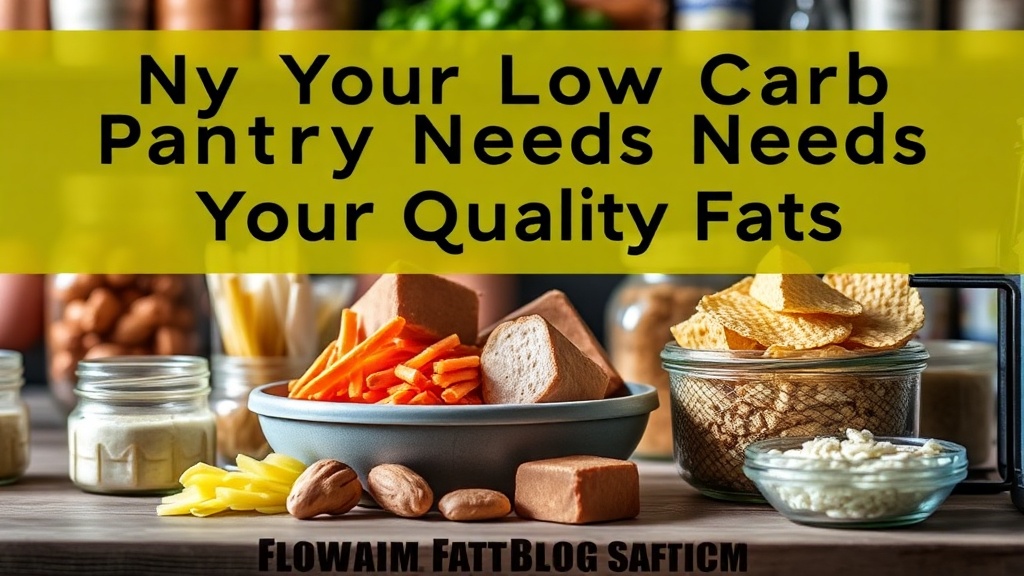
Why Your Low Carb Pantry Needs High Quality Fats

Understanding the Role of Fats in Balanced Eating
In this post, you'll learn why choosing the right fats—rather than just cutting carbs—is the secret to feeling full and maintaining steady energy levels. We'll look at how to distinguish between processed fats and nutrient-dense options that actually support your metabolic health.
When people first start reducing their carbohydrate intake, the instinct is often to reach for anything that isn't a grain or a sugar. This can lead to a heavy reliance on highly processed vegetable oils or "keto-friendly" snacks that are actually loaded with inflammatory ingredients. Instead of focusing on what you're removing, the goal should be what you're adding to your plate to create a sense of satiety. If you've ever felt that mid-afternoon slump after a low-carb lunch, it's likely because your meal lacked the healthy fats needed to signal to your brain that you're actually satisfied.
A common mistake I see is treating fat as a scary outlier rather than a functional tool. When you manage your blood sugar, fats act as a slow-burning fuel source. They help slow down the absorption of glucose (even from the smaller amounts of carbs you do eat), which prevents those sharp insulin spikes that can leave you feeling drained. It isn't about being "high fat" for the sake of a trend; it's about choosing fats that provide micronutrients and support hormone production.
Can I Eat Saturated Fats Every Day?
This is one of the most debated questions in the nutrition world. The reality is a bit more nuanced than the old-school advice of "all fat is bad." While it's true that a diet heavy in processed, trans-fat-laden foods can be problematic, the quality of your saturated fat matters immensely. For instance, the saturated fats found in grass-fed butter or organic coconut oil are quite different from the highly processed fats found in a box of commercial crackers.
The key is balance. You don't need to fear a bit of real butter on your vegetables, but you also shouldn't rely on it as your primary calorie source. I always suggest a mix of monounsaturated fats—like those found in avocados and extra virgin olive oil—and a reasonable amount of saturated fats. This variety ensures you're getting a spectrum of nutrients. If you want to dive deeper into the specifics of fatty acid profiles, the Harvard T.H. Chan School of Public Health provides excellent breakdowns of different oil types and their health implications.
Which Fats Are Best for Steady Energy?
If you want to avoid the dreaded "brain fog" that sometimes accompanies a lower-carb lifestyle, look toward medium-chain triglycerides (MCTs) and monounsaturated fats. MCT oil, often derived from coconut, is a favorite because it's processed by the liver more quickly, providing a more immediate source of energy. However, it's easy to overdo it, so start slow.
Avocado oil is another superstar in a carb-conscious kitchen. It has a much higher smoke point than many other oils, meaning it's safer for high-heat cooking like searing or roasting. This is a practical way to add healthy fats to your meals without adding the bitter or "burnt" taste that can happen when using lower-quality oils. Using high-quality fats also makes your meals taste better—and frankly, food should taste good. There is no reason to eat bland, unseasoned food just because you're being mindful of your carb intake.
How Do I Read Labels for Healthy Fats?
The grocery store can be a mineza of confusing labels. You'll see "low carb" on the front of a package, but if you flip it over, the ingredient list might be a long list of highly refined seed oils like soybean or cottonseed oil. These are often used as cheap fillers in many processed products. My rule of thumb? If the oil is the first or second ingredient, and it's a highly refined seed oil, I usually put it back on the shelf.
Look for terms like "cold-pressed," "extra virgin," or "unrefined." These terms usually indicate that the oil was extracted using methods that preserve more of the nutrient profile and flavor. For example, Mayo Clinic offers great resources on how to choose ingredients that support long-term wellness rather than just quick fixes. A pantry stocked with high-quality olive oil, avocado oil, and real nut butters will serve you much better than a pantry full of "diet" products that are mostly empty calories.
Creating a pantry that supports your goals doesn't require a complete overhaul overnight. Start by replacing one processed oil with a high-quality version. Maybe it's switching from generic vegetable oil to a nice extra virgin olive oil for your dressings, or opting for real almond butter instead of a sweetened version. These small, intentional shifts in your ingredient quality will yield much better results for your energy levels and your enjoyment of food in the long run.
| Oil Type | Best Use | Flavor Profile |
|---|---|---|
| Extra Virgin Olive Oil | Salad dressings, low-heat cooking | Grassy, fruity, robust |
| Avocado Oil | Searing, roasting, high-heat frying | Neutral, mild |
| Coconut Oil | Baking, sautéing | Sweet, tropical |
| Grass-fed Butter | Finishing dishes, sautéing | Rich, creamy |