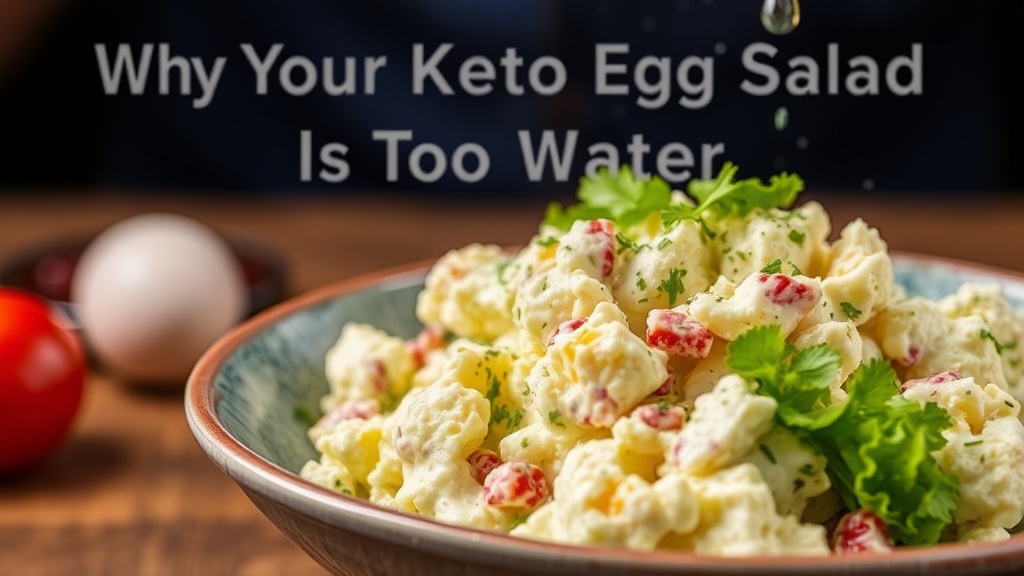
Why Your Keto Egg Salad Is Too Watery

Overcooking the Egg Yolks
Using Too Much Vinegar or Lemon Juice
The Wrong Ratio of Fat to Moisture
Not Draining the Egg Whites Properly
Adding Ingredients While Eggs Are Still Warm
Have you ever opened your Tupperware only to find your keto egg salad swimming in a pool of liquid?
It is a frustrating experience. You followed the recipe, used high-quality eggs, and perhaps even added premium avocado oil mayo, yet the texture is thin, runny, and unappealing. A watery egg salad doesn't just ruin the mouthfeel; it makes it difficult to use as a filling for lettuce wraps or a topping for a low-carb toast substitute. This post explains the specific science behind why moisture escapes your eggs and how you can fix it using professional kitchen techniques and better ingredient choices.
The issue usually stems from one of three areas: how you cook the eggs, how you prep them, or the moisture content of your additives. By adjusting these variables, you can achieve a creamy, stable consistency that holds its shape on a plate.
1. Overcooking the Egg Yolks
One of the most common mistakes is boiling eggs for too long. While a hard-boiled egg is necessary for salad, overcooking leads to a chemical reaction that creates a "sulfur ring"—that greenish-gray tint around the yolk. Beyond the aesthetic issue, overcooking causes the proteins to tighten too much and the fats within the yolk to separate or become brittle. When the yolk structure breaks down excessively, it cannot emulsify properly with your fats, resulting in a broken, watery sauce rather than a cohesive cream.
To avoid this, aim for a precise boil time. For a standard large egg, six to seven minutes in boiling water (followed by an ice bath) usually yields a perfect hard-set yolk that is still creamy in the center. If you see a green ring, you have gone too far. This excess heat has also driven out the moisture that should be held within the yolk, leaving you with a crumbly mess that requires more liquid to "fix," which ironically makes the salad even wetter.
2. Using High-Moisture Vegetables
Many people try to add "crunch" to their egg salad by including celery, cucumbers, or green onions. While these are excellent low-carb choices, they are significant sources of water. If you chop celery and stir it directly into the eggs, the salt in your seasoning will begin to draw the water out of the vegetable cells through osmosis. This turns your salad into a soggy mess within an hour.
To prevent this, use these two professional techniques:
- The Salt Timing Rule: Never add salt or mustard to your egg salad until the very moment you are ready to serve. Salt is a desiccant; it pulls moisture out of everything it touches.
- The Sauté Method: If you want the flavor of onions or shallots without the water, sauté them in butter or avocado oil first to cook off the internal moisture before adding them to the cold eggs.
- The Pat-Dry Technique: If you use diced cucumbers or even radishes, place the chopped pieces in a paper towel and press firmly to remove excess liquid before mixing them into the bowl.
3. Choosing the Wrong Type of Mayonnaise
Not all keto-friendly condiments are created equal. If you are using a low-fat or "light" mayonnaise to save on calories, you are almost certainly going to end up with a watery salad. Traditional mayonnaise is an emulsion of oil and egg yolks. "Light" versions often replace much of the oil with water or thickeners like modified food starch. When these ingredients interact with the acid in mustard or lemon juice, the emulsion often breaks, leading to a thin, oily liquid at the bottom of the bowl.
For the best results, stick to a high-fat, oil-based mayonnaise. Brands like Primal Kitchen or Kewpie (the Japanese version, which uses only egg yolks and no vinegar) provide a much more stable emulsion. Because these are higher in fat, they coat the egg proteins more effectively, creating a thick, velvety texture that stays stable even after sitting in the refrigerator.
4. Improper Egg Chopping Techniques
The way you physically break down the eggs dictates how much surface area is exposed to your dressing. If you use a food processor to "pulse" your eggs, you are essentially creating egg dust. This fine powder has a massive surface area, which means it will absorb the moisture from your mayo and then immediately release it as the proteins break down, leading to a liquidy consistency. Furthermore, a food processor can whip too much air into the eggs, creating a frothy, unstable texture.
Instead, use a knife for a controlled chop. A coarse chop provides "nooks and crannies" for the dressing to cling to, which creates a thicker mouthfeel. If you prefer a smoother salad, use a fork to mash the yolks with a small amount of your dressing first to create a thick paste, and then gently fold in the chopped whites. This ensures the "binder" is thick before the bulk of the ingredients are added.
5. Neglecting the Acid-to-Fat Ratio
Acid is necessary for flavor, but it is also a liquid. If your recipe calls for a tablespoon of Dijon mustard and a teaspoon of lemon juice, you are adding a significant amount of liquid. If you don't balance this with enough fat, the acid will thin out the mayonnaise and cause the salad to "weep."
A professional tip for a stable keto egg salad is to use a "paste" approach for your seasonings. Instead of pouring liquid mustard or lemon juice over the eggs, mix your mustard, spices, and a tiny bit of lemon zest into your mayonnaise in a separate small bowl first. This creates a concentrated, thick dressing. By incorporating the flavors into the fat first, you ensure the acid is emulsified and won't separate from the eggs once they are combined.
Summary Checklist for Perfect Keto Egg Salad
Before you start your next meal prep, keep this checklist in mind to ensure a creamy, non-watery result:
- Boil Time: 7 minutes maximum to avoid the green sulfur ring and over-dried yolks.
- Temperature: Use an ice bath to stop the cooking process immediately, preserving the yolk's moisture.
- Vegetable Prep: Pat all crunchy additions dry with a paper towel before adding.
- Ingredient Quality: Use full-fat, oil-based mayonnaise rather than "light" versions.
- The Salt Rule: Season at the very last second to prevent osmosis-driven water release.
By paying attention to these small technical details, you move away from "survival eating" and toward actually enjoying the food you make. A well-constructed egg salad is a versatile, high-protein tool for a low-carb lifestyle, and it should be something you look forward to eating, not something you dread opening from the fridge.