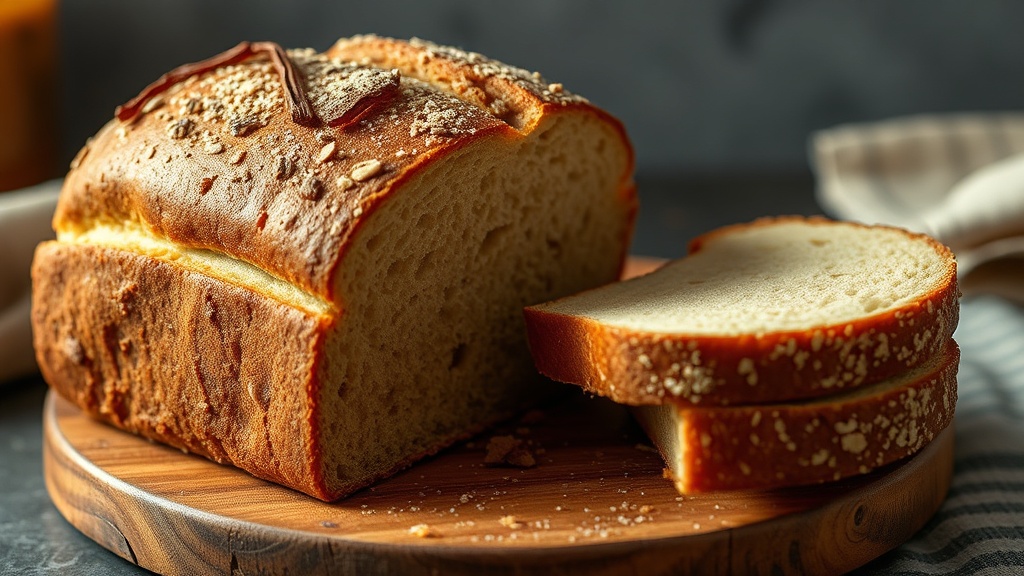
Why Your Keto Bread Is Too Dense and Heavy

Nearly 80% of homemade low-carb breads fail to achieve a light, airy crumb, often resulting in a texture that resembles a heavy brick rather than a sandwich loaf. If you have struggled with keto bread that feels dense, gummy, or unpleasantly heavy, the issue likely isn't your skill level, but rather a fundamental misunderstanding of how non-wheat ingredients interact with moisture and structure. This post explains the science behind why low-carb baking often fails and provides specific, actionable adjustments to help you achieve a lighter, more digestible texture.
The Structural Problem: Missing Gluten and Protein Networks
Traditional wheat bread relies on gluten—a complex network of proteins (gliadin and glutenin) that forms when flour is hydrated and kneaded. This network acts like a series of tiny balloons, trapping carbon dioxide produced by yeast to create lift. When you swap wheat flour for almond flour or coconut flour, you lose that elastic structure. Without a functional "net" to hold air, the gases escape, and your bread collapses into a dense mass.
To compensate for the lack of gluten, many recipes over-rely on heavy binders. While eggs are necessary, using too many can lead to a "rubbery" or "custardy" interior. If your bread feels more like an omelet than a loaf, you have likely over-indexed on whole eggs without enough structural support. To fix this, you must introduce ingredients that mimic the structural integrity of gluten without adding excessive carbohydrates.
The Role of Hydrocolloids and Binders
In professional low-carb baking, we use hydrocolloids to create the "stretch" that wheat provides. These are substances that turn liquids into gels. If you want a bread that actually has a bit of a "chew," you cannot rely on almond flour alone. You need to incorporate specific functional ingredients:
- Xanthan Gum: This is the gold standard for low-carb baking. It provides viscosity and helps trap air bubbles. However, use it sparingly; adding too much will make your bread feel gummy and "slimy" on the tongue.
- Psyllium Husk Powder: Unlike xanthan gum, which creates a gel, psyllium husk provides a more fibrous, structural lift that mimics the texture of whole wheat. It is highly absorbent and essential for creating a "bread-like" crumb.
- Methylcellulose: Often used in high-end molecular gastronomy, this can help stabilize foams and structures, though it is harder to find in a standard grocery store like Kroger or Publix.
If you find your bread is struggling with texture issues, you might also want to check your binders in other recipes, such as why your keto mayonnaise is breaking, as emulsion and binding are closely related scientific principles.
The Moisture Trap: Flour Absorption Disparity
One of the biggest mistakes in low-carb baking is treating almond flour and coconut flour as interchangeable. They have vastly different absorption rates. Almond flour is relatively low in fiber and high in fats, meaning it doesn't soak up much liquid. Coconut flour, however, is incredibly thirsty. It can absorb up to eight times its weight in liquid.
If a recipe calls for 1 cup of almond flour and you decide to swap in 1 cup of coconut flour to "lower the carbs," your bread will be a dry, crumbly mess. Conversely, if you use a recipe designed for coconut flour but use almond flour instead, the batter will be too thin to hold air, resulting in a dense, wet loaf. Always scale your liquids based on the specific flour type you are using.
Managing Liquid-to-Dry Ratios
To avoid a heavy loaf, you must manage the "wetness" of your dough. Here are three specific ways to balance your hydration:
- Measure by Weight, Not Volume: A cup of almond flour can weigh significantly less than a cup of coconut flour depending on how packed it is. Use a digital kitchen scale to ensure your ratios are precise.
- The "Hydration Test": Before baking, your dough should have a specific consistency. For a yeast-based keto bread, it should be tacky but not stick to your fingers like pancake batter. If it is too liquid, you will never get a rise.
- Temperature Control: Using lukewarm water (around 105°F) for your yeast helps activate the biological lift, whereas using hot water will kill the yeast and leave you with a heavy, unrisen brick.
The Yeast and Leavening Dilemma
In traditional baking, yeast provides both flavor and lift. In low-carb baking, yeast can be tricky because the lack of starch means there is less "food" for the yeast to consume. This can result in a very slow rise and a dense final product. Many people attempt to bypass this by adding more baking powder or baking soda, but this often leads to a bitter aftertaste and an overly coarse crumb.
Optimizing Your Leavening Agents
To get a better rise without the heavy density, try these professional adjustments:
- Double Leavening: Use a combination of a biological leavener (yeast) and a chemical leavener (baking powder). The yeast provides the long-term structure, while the baking powder provides an immediate "burst" of air during the initial stages of baking.
- Egg Whites vs. Whole Eggs: For a lighter, more "aerated" feel, separate your eggs. Whip the egg whites to stiff peaks (the meringue method) and fold them into your batter at the very end. This introduces air bubbles that are physically trapped in the protein structure of the whites, providing a much lighter crumb than using whole eggs alone.
- Check Your Baking Powder: If your bread is flat and heavy, your baking powder might be expired. Even a small amount of moisture in the container can neutralize the lifting power.
Common Mistakes: Why Your Bread Feels "Gummy"
If your bread comes out of the oven looking fine but feels gummy or heavy once it cools, you are likely dealing with a moisture retention issue. This is common with almond-based breads because the oils in the nuts can create a heavy, saturated texture if not managed correctly.
The Cooling Process
The most frequent error I see is slicing into a low-carb loaf while it is still warm. In wheat bread, the structure sets as it cools. In keto bread, the starches and proteins are even more sensitive to temperature. If you cut into a warm almond flour loaf, the steam escapes too quickly, and the internal structure collapses, leaving you with a gummy, wet center. Always allow your bread to cool completely on a wire rack to ensure the moisture evaporates properly and the crumb sets.
The Fat Content Factor
Low-carb recipes are naturally high in fat because of the nut flours and eggs. While fat provides flavor, too much of it will weigh down your dough. If you are using a recipe that calls for a large amount of melted butter or heavy cream, try replacing a portion of the liquid fat with a lighter option, or slightly increasing your psyllium husk content to absorb that extra oil. This prevents the "greasy" feeling that often accompanies dense keto breads.
Summary Checklist for Better Keto Bread
Before you start your next bake, run through this checklist to ensure you aren't setting yourself up for a heavy loaf:
- Is my binder appropriate? (Did I include psyllium husk or xanthan gum for structure?)
- Am I using the right flour ratio? (Did I account for the high absorption of coconut flour?)
- Did I weigh my ingredients? (Did I use a scale instead of measuring cups?)
- Is my yeast active? (Did I test my yeast in warm water before adding it to the flour?)
- Am I being patient? (Am I waiting for the bread to cool completely before slicing?)
By focusing on these structural elements—binding, hydration, and leavening—you can move away from the "dense brick" phase of low-carb baking and start creating breads that actually feel like a treat rather than a chore to eat.