What Should Actually Go on Your Plate When You're Eating Low-Carb?

You sit down to dinner. The chicken's seasoned perfectly, the vegetables are roasted until caramelized, and there's a pat of butter melting over everything. But something feels off. An hour later, you're raiding the pantry for crackers or chocolate—convinced that low-carb just doesn't work for you. The problem isn't your willpower. It's that your plate is missing the balance that keeps you satisfied.
After years of coaching people through the transition from standard diets to carb-conscious eating, I've watched this pattern repeat. Someone swaps pasta for zucchini noodles, drops the bread, and wonders why they're starving by 9 PM. The answer is almost always the same: they're not building plates that deliver what their bodies actually need. When you cut carbs without a plan for what replaces them, you end up hungry, cranky, and convinced this whole approach is unsustainable.
The good news? Building a balanced low-carb plate isn't complicated. It requires a simple framework you can apply anywhere—from your own kitchen to a restaurant table. Here's exactly how to construct meals that keep you full, energized, and genuinely satisfied.
Why Does My Low-Carb Meal Leave Me Hungry an Hour Later?
This is the question that plagues new low-carb eaters more than any other. You've done everything "right"—skipped the rice, passed on the bread, loaded up on vegetables—and yet your stomach is growling before the dishes are even done.
The culprit is usually inadequate protein or fat. When you remove carbohydrate calories from your plate, you need to replace them with something else. That something isn't just more vegetables (though those matter). It's protein and fat in amounts that signal satiety to your brain.
Research from the National Center for Biotechnology Information confirms what many low-carb eaters discover through trial and error: protein is the most satiating macronutrient. When study participants increased protein from 15% to 30% of their calories, they spontaneously ate 441 fewer calories per day without trying. Their hunger hormones dropped. Their satisfaction increased.
But protein alone isn't enough. Fat slows gastric emptying—the fancy way of saying it keeps food in your stomach longer. Without it, that chicken breast moves through your digestive system too quickly, leaving you searching for snacks. A drizzle of olive oil, a handful of nuts, or a few slices of avocado can transform a meal from forgettable to genuinely filling.
What Does a Balanced Low-Carb Plate Actually Look Like?
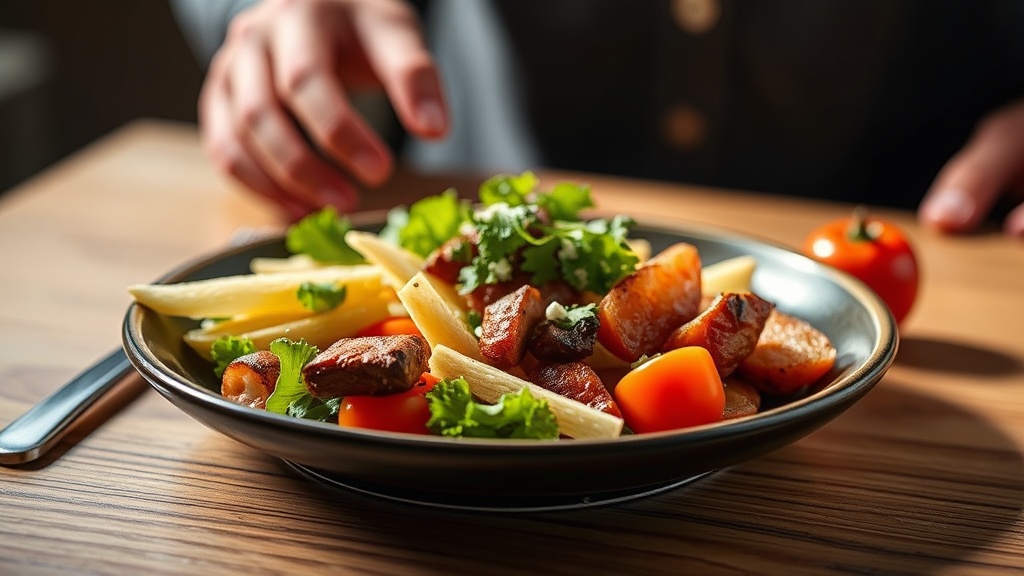
Forget complicated macros and food scales. The easiest way to build a satisfying low-carb plate is to follow the visual rule: half your plate non-starchy vegetables, one-quarter protein, one-quarter healthy fat—with room for flexibility based on your hunger and activity level.
The Vegetable Half: This isn't a punishment. Non-starchy vegetables are where flavor, texture, and volume live. Think roasted broccoli with crispy edges, sautéed spinach with garlic, raw cucumber salads with lemon and herbs. These foods fill your stomach physically, provide fiber that feeds beneficial gut bacteria, and deliver micronutrients that support everything from thyroid function to skin health. Load up here—seriously, don't be shy. A heaping pile of roasted Brussels sprouts or a big bowl of arugula with olive oil will do more for your satisfaction than a tiny portion of anything else.
The Protein Quarter: This is your anchor. For most people, 4-6 ounces of meat, fish, eggs, or tofu provides the amino acids needed for muscle maintenance, enzyme production, and hormone synthesis. But don't get too focused on exact weights. A palm-sized portion is a useful guide, and your hunger should inform adjustments. Had a tough workout? Add more. Feeling less active today? A smaller portion works fine.
The Fat Quarter: This is where low-carb eating gets delicious—and where many people get nervous. We've been conditioned to fear fat, but on a low-carb plate, it's not optional. It's necessary. Without adequate fat, your body can't absorb fat-soluble vitamins (A, D, E, and K). Your cell membranes suffer. And perhaps most practically for day-to-day life—you stay hungry.
Sources matter here. Extra virgin olive oil, avocado, nuts, seeds, fatty fish, and yes—butter and quality cheese—provide the kinds of fats that support hormone health and keep you satisfied. A study published in the New England Journal of Medicine found that people following a Mediterranean diet supplemented with extra virgin olive oil or nuts lost more weight and had better cardiovascular markers than those restricting fat. The fear was misplaced.
How Do I Build These Plates When I'm Eating Out?
Restaurant menus aren't designed for low-carb eaters. They're designed to sell starch-heavy plates because pasta, rice, and bread are cheap fillers that boost profit margins. This doesn't mean you can't eat out—you absolutely can. It just means you need a strategy.
Start by looking at the protein section first. Most restaurants offer grilled fish, roasted chicken, or steak options. Ignore the sides they're paired with—you're going to modify those anyway. Order your protein and request double vegetables instead of potatoes, rice, or bread. Most kitchens are happy to accommodate this simple swap.
Don't be afraid to ask for sauce on the side. Many restaurant sauces are thickened with flour or cornstarch and loaded with sugar. A steak with butter and herbs? Perfect. That same steak drowning in a sweet glaze? Not so much. If you're unsure about ingredients, ask your server. Any decent restaurant can tell you what's in their preparations.
Salads can be excellent options—but watch the traps. Croutons, candied nuts, dried fruit, and sweet dressings can turn a low-carb choice into a sugar bomb. Order dressing on the side (olive oil and vinegar is always safe) and ask them to hold the crunchy carb toppings. Add protein—grilled salmon, shrimp, or chicken—to make it a complete meal rather than a side dish.
Ethnic cuisines require slightly different approaches. At Italian restaurants, antipasto platters and grilled meat or fish dishes work well. Skip the bread basket and focus on dishes featuring olive oil, vegetables, and protein. At Asian restaurants, avoid the rice and noodle sections entirely. Look for stir-fries (ask for light sauce), grilled meat or fish options, and sashimi if Japanese. Mexican restaurants offer fajitas without tortillas, ceviche, and grilled meats with guacamole—just say no to the rice and beans.
What About Snacks and Small Meals?
Not every eating occasion involves a full plate. Sometimes you need something between meals, or a lighter option when you're not particularly hungry. The same principles apply—just in miniature form.
Effective low-carb snacks combine protein and fat with minimal carbohydrate. Hard-boiled eggs with a sprinkle of salt. A small handful of almonds or macadamia nuts. Celery sticks with almond butter. Leftover roasted chicken wrapped in lettuce. A few slices of cheese with cucumber rounds.
What doesn't work? Carbohydrate-heavy snacks eaten alone—even supposedly "healthy" ones like fruit or crackers. These spike blood sugar, trigger insulin release, and set you up for a crash (and more hunger) an hour later. If you want something sweet, pair it with protein and fat. Berries with full-fat Greek yogurt. A square of dark chocolate with a few walnuts. The combination matters more than any single food.
How Do I Know If My Plate Is Working?
The best feedback system for any eating approach is how you feel—not immediately after eating, but in the hours that follow. A well-constructed low-carb plate should leave you pleasantly full (not stuffed) for 3-4 hours. Your energy should be steady, without the spikes and crashes that characterize higher-carb eating. You shouldn't be thinking about food constantly.
If you're hungry within two hours, something needs adjustment. Usually it's not enough protein or fat. Sometimes it's not enough total food—low-carb isn't about starvation, and active people need substantial plates. Trust your body's signals and adjust portions accordingly.
Track how you feel rather than obsessing over macros. Are you sleeping well? Is your mood stable? Do you have sustained energy for workouts and daily life? These markers matter more than whether you hit some arbitrary percentage of fat intake. The goal isn't perfection—it's building a sustainable way of eating that actually works for your life.
The transition to low-carb eating doesn't have to mean deprivation, complicated rules, or constant hunger. By building plates that prioritize vegetables, include adequate protein, and embrace healthy fats, you create meals that satisfy your body and your taste buds. Start with the next meal. Fill half your plate with vegetables you actually enjoy. Add a solid portion of protein. Don't skimp on the olive oil or butter. Then pay attention to how you feel. That's the only guide you really need.