What Actually Happens to Your Blood Sugar When You Pair Carbs With Fat and Protein

What Actually Happens to Your Blood Sugar When You Pair Carbs With Fat and Protein
There's a trick I teach almost every client in their first session, and it's not a supplement or a hack. It's this: never eat a carb naked.
Not literally naked — I mean without fat, protein, or fiber alongside it. Because a solo carb hits your bloodstream completely differently than a carb that has company.
I want to walk you through exactly what happens inside your body in both scenarios, because once you see it, you'll never look at a bowl of rice the same way.
Scenario 1: The Naked Carb
Picture eating a plain white bagel on an empty stomach. Here's what unfolds over the next two hours:
- Minutes 0–15: Your digestive enzymes break down that refined starch fast. Amylase in your saliva starts the job before the bagel even hits your stomach.
- Minutes 15–30: Glucose floods into your small intestine and gets absorbed rapidly. Your blood sugar starts climbing — sometimes spiking 40–60 mg/dL above baseline in healthy people.
- Minutes 30–60: Your pancreas scrambles to release insulin. A big, sharp insulin spike follows the glucose spike. This is your body in cleanup mode.
- Minutes 60–120: Insulin overshoots. Blood sugar drops — sometimes below where you started. You feel tired, hungry again, maybe a little irritable. The classic "crash."
This rollercoaster is called reactive hypoglycemia when it gets pronounced enough. And for people with insulin resistance or PCOS (hi, that's me), the spikes are higher and the crashes are deeper.
Scenario 2: The Dressed Carb
Now imagine that same bagel, but this time you've spread cream cheese on it and added a couple of eggs on the side. Different story:
- Minutes 0–15: Fat and protein slow gastric emptying. Your stomach literally holds onto the food longer before releasing it into the small intestine. The technical term is delayed gastric motility, but I just call it "the speed bump effect."
- Minutes 15–45: Glucose trickles into your bloodstream instead of flooding it. The spike is smaller — research shows roughly 20–40% lower peak glucose when carbs are eaten with fat and protein.
- Minutes 45–90: Insulin release is more gradual and proportional. No frantic overcorrection needed.
- Minutes 90–180: Blood sugar comes down gently. No crash. You feel stable, and hunger doesn't come clawing back for 3–4 hours.
This isn't theory. A 2015 study in Diabetes Care by Shukla et al. found that eating protein and vegetables before carbohydrates reduced post-meal glucose by 29% and insulin by 37% compared to eating carbs first. The food was identical — only the order changed.
Why This Matters More Than Counting Every Gram
Here's my honest take as a dietitian: obsessive carb counting works for some people, but it burns most people out within weeks. What doesn't burn out? Building meals that naturally blunt glucose spikes.
When I was first diagnosed with PCOS and started wearing a continuous glucose monitor, I learned more in two weeks than I did in a semester of nutrition biochemistry. My blood sugar barely moved when I ate carbs with fat, protein, and fiber. But a handful of crackers alone? Spike city.
The practical takeaway is stupidly simple:
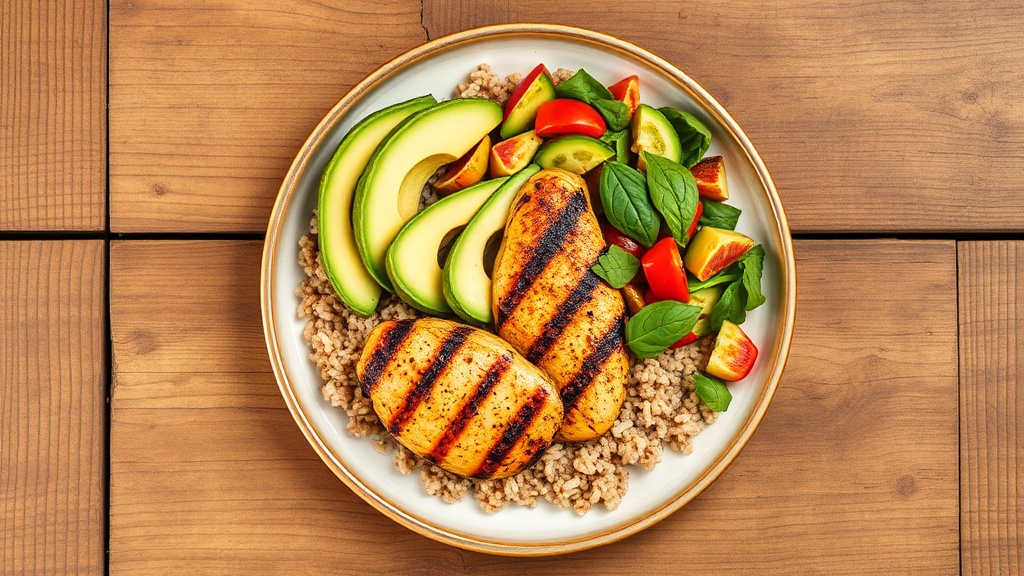
- Always pair your carbs. Rice with chicken thighs and avocado. An apple with almond butter. Pasta with a meat sauce and olive oil — not plain noodles with fat-free marinara.
- Eat protein and veggies first. If your plate has chicken, broccoli, and sweet potato, eat in roughly that order. The fiber and protein create a physical buffer in your gut.
- Fat is your friend at the table. I know decades of low-fat messaging made this feel wrong, but dietary fat genuinely slows carb absorption. Olive oil on bread. Butter on your corn. Full-fat yogurt with berries.
The Three Foods I Use as "Glucose Buffers"
These aren't magic — they're just reliable partners for any carb-heavy moment:
1. Eggs
Cheap, fast, and they go with everything. When I know I'm eating something carb-forward (breakfast tacos, a sandwich, toast), eggs are my first move. Six grams of protein and five grams of fat per egg, all working to slow that glucose hit.
2. Avocado
Yes, I live in San Antonio. Yes, I'm biased. But avocado delivers healthy fat and fiber in one package. Half an avocado with any meal noticeably flattens my glucose curve — I've watched it happen on my CGM dozens of times.
3. Nuts or Nut Butter
A tablespoon of almond butter before a piece of fruit, or a small handful of walnuts with oatmeal. The combination of fat, protein, and fiber in nuts makes them an ideal carb companion. Just watch portions — nuts are calorie-dense, and a "handful" can quietly become 400 calories.
What About Fiber Alone?
Fiber helps, but it's not the full picture. Soluble fiber (think chia seeds, oats, beans) forms a gel-like substance in your gut that physically slows glucose absorption. That's real and measurable. But fat and protein add a different mechanism — they trigger hormones like GLP-1 and CCK that slow gastric emptying from a signaling level, not just a physical one.
The best approach? All three. Fiber, fat, and protein together create the flattest glucose response. That's why a balanced meal beats a fiber supplement every time.
A Note on Individual Variation
I want to be straight with you: not everyone responds to carbs the same way. Genetics, gut microbiome, sleep, stress, activity level, and insulin sensitivity all play a role. A serving of rice might spike one person 50 points and barely register for another.
This is why I'm a fan of CGMs for anyone who's curious about their own patterns. You don't need one forever — even two weeks of data can teach you which carbs your body handles well and which ones need more backup.
But the "don't eat carbs naked" rule? That's universal. It works for everyone I've ever coached, regardless of their starting point.
The Bottom Line
You don't have to quit carbs. You just have to stop eating them alone. Pair every carb with protein, fat, or both, and your blood sugar will thank you with a gentle hill instead of a rollercoaster.
This is the kind of conscious eating I talk about on this blog — not militant restriction, but understanding how food actually works in your body so you can make smarter choices without white-knuckling your way through every meal.
Try it this week: pick one carb you eat regularly and add a fat or protein partner. Watch how you feel two hours later. That's the only evidence you need.
Medical disclaimer
This content is for general education only and is not a substitute for personalized medical advice. If you have PCOS, diabetes, or any health condition, discuss dietary changes with your doctor or a registered dietitian.