Spring Break Meal Prep: An RD's Low-Carb Survival Guide for Chaos Season

Spring break is two weeks away and I'm already mentally preparing.
Not in a "I've got a color-coded meal plan laminated on the fridge" way. More in a "Luna is going to be home, Diego has a tournament schedule that makes zero sense, and I still need to actually eat food that works for my body" way.
Here's what I've learned after three years of managing PCOS through food and eight years as a registered dietitian: you cannot out-willpower a chaotic environment. If your house is full of snacks you didn't plan, you're eating out at places that weren't your call, and your usual Tuesday routine no longer exists — that's not a discipline problem. That's an environment problem.
So instead of bracing for two weeks of "being good" or "staying on track" (phrases I genuinely hate), I set up ONE thing that doesn't require daily decisions: my meal prep.
Everything else gets to be normal.
The Real Problem Spring Break Creates
Let me be specific about what actually happens, because vague "disrupted routines" doesn't capture it.
My breakfast-and-lunch windows disappear. Luna wakes up at 7am and immediately needs things. Diego is out by 6am for practice. Suddenly I'm eating whatever I can find at 10:30am instead of my usual 8am protein-first breakfast — and by noon I've had two cups of coffee and a handful of her goldfish crackers and my blood sugar is doing something I don't love.
Then dinner becomes: "Where do you want to go? I don't know, where do YOU want to go?" And we end up at Chick-fil-A or the Tex-Mex place on Blanco because Luna will actually eat there and we're all tired.
For me — managing PCOS, where insulin consistency genuinely matters — that two-week slide has real downstream effects on how I feel. Nothing dramatic. But my cravings creep up, my energy gets weird, and by the time we're back to normal I feel like I spent two weeks treading water. (That's my personal experience, not a guarantee of anything.)
My solution isn't a strict plan. It's a prep system that makes my default choices easy. So when the environment goes sideways, I have food ready to grab and a few restaurant plays in my back pocket.
The Sunday Batch Cook (About 1.5 Hours)
I do this the Sunday before spring break starts. One time. That's it.
The goal: proteins I can pull from the fridge for 8–10 days, plus two sides that work for my plate AND can be part of a normal meal for Diego and Luna. This mirrors the structure I use in my weekly low-carb meal plans — batch-cook proteins, flexible sides, one meal that works for everyone.
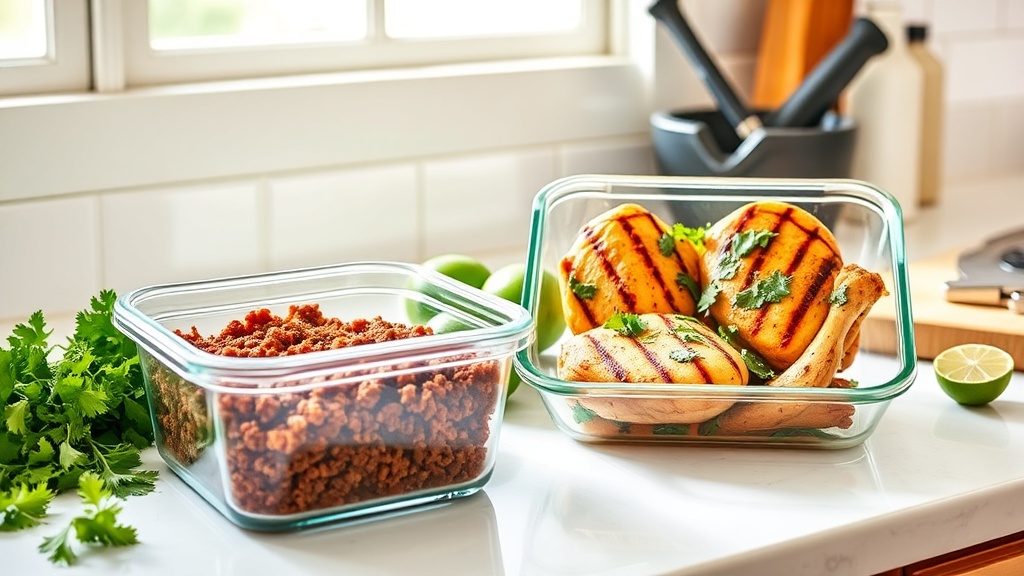
Seasoned Ground Beef Picadillo
This is the workhorse. It's based on how my mom made it — tomatoes, onion, garlic, cumin — with a little diced potato if Diego and Luna are having it over rice. I skip the potato in my portion.
Makes: About 6 servings | My portion net carbs: ~4g
Ingredients:
- 2 lbs 80/20 ground beef
- 1 can (14 oz) diced tomatoes, drained
- 1 white onion, diced
- 4 garlic cloves, minced
- 1 tsp cumin, 1 tsp chili powder, salt + pepper
- Optional for the fam: 1 small russet potato, diced
Method: Brown beef, drain most of the fat. Add onion and garlic, cook until soft. Add tomatoes and spices. Simmer 15 minutes. Pull my portion before adding potato; add it for their containers and cook another 10.
Batch note: Freezes well in individual containers. Refrigerated cooked ground beef is safe for 3–4 days per USDA food safety guidelines.[^1]
Macros per serving (my portion, no potato):
- Calories: ~340 | Protein: 28g | Fat: 22g | Total carbs: 6g | Net carbs: 4g
(Calculated using USDA FoodData Central: 80/20 ground beef [FDC #174032], canned diced tomatoes [FDC #170506], onion, garlic[^2])
Cilantro-Lime Grilled Chicken Thighs
Bone-in skin-on thighs are the most forgiving protein to batch cook. They don't dry out. They reheat beautifully. And the cilantro-lime marinade means I actually look forward to eating them. (If you want a faster option, I have a 15-minute one-pan chicken & asparagus recipe that works for spring break weeknight emergencies.)
Makes: 8 thighs (4 servings of 2) | Net carbs: ~2g per 2 thighs
Marinade:
- Juice of 2 limes, 3 tbsp olive oil, 1/2 cup chopped cilantro, 3 garlic cloves minced, 1 tsp cumin, 1 tsp salt
Marinate 2 hours minimum (overnight is better). Grill on medium-high, 6–7 minutes per side until 165°F internal — the USDA safe minimum for poultry.[^3] Rest 5 minutes.
Macros per 2 thighs:
- Calories: ~380 | Protein: 32g | Fat: 26g | Net carbs: 2g
(Calculated using USDA FoodData Central: chicken thigh with skin, bone-in [FDC #171477]; marinade carbs from lime juice[^2])
Cauliflower Rice "Fried Rice"
I'm going to be honest with you: cauliflower rice does NOT work in everything. It doesn't work as a substitute for white rice at dinner when Diego's bowl of actual rice is sitting right there looking perfect. It's fine. I know what it is.
BUT — it works great cold, straight from the container, as a grab-and-go lunch mixed with picadillo or chicken and some hot sauce. That's the use case. I'm not trying to convince anyone it's the same.
Makes: 4 servings | Net carbs: ~5–8g depending on add-ins
Ingredients:
- 1 large head cauliflower, riced (or 2 bags frozen, thawed + squeezed dry)
- 2 eggs, scrambled in
- 1/2 cup frozen peas (optional — adds ~3g net carbs)
- 3 tbsp soy sauce or coconut aminos
- 1 tbsp sesame oil
- Garlic, ginger, green onion
Method: Get a big skillet screaming hot. Cook the cauliflower in batches — don't crowd it or it steams and gets soggy. This is where most people go wrong. High heat, small batches, spread it out. Push to the side, scramble the eggs in. Add everything else, toss for 2 minutes.
Macros per serving (with peas):
- Calories: ~145 | Protein: 7g | Fat: 6g | Net carbs: ~8g
(Calculated using USDA FoodData Central: cauliflower [FDC #169986], whole egg [FDC #171287], green peas [FDC #170420][^2])
Hard-Boiled Eggs
Just make a dozen. They're ~0.5g net carbs each, ~6g protein, portable, no thought required. Peel them, put them in a container, done. (Per USDA FoodData Central, one large hard-boiled egg: 78 cal, 6.3g protein, 5.3g fat, 0.6g total carbs [FDC #171287][^2].)*
Total Batch Cook Budget
| Item | Approximate Cost |
|---|---|
| 2 lbs 80/20 ground beef | $8–10 |
| 8 chicken thighs | $7–9 |
| 1 head cauliflower (or 2 frozen bags) | $3–5 |
| Canned tomatoes, aromatics, limes, cilantro | $5–7 |
| 1 dozen eggs | $3–4 |
| Total | ~$26–35 |
Prices are approximate for San Antonio, Texas as of March 2026. Costs vary by region, store, and market conditions.
That covers my breakfasts and lunches for most of 10 days. At those prices it works out to roughly $3–4 per meal for my portions — less than any restaurant option I know of in my area. Your math will differ depending on where you shop.
Restaurant Survival: Where Kids Actually Want to Go
I'm not going to suggest you skip the restaurant outings. Luna loves Chick-fil-A. I love that she gets excited about it. That's a real thing and it matters.
Here's how I navigate the places we actually end up:
Chick-fil-A
I have a complete low-carb guide to Chick-fil-A for spring break outings. The short version: grilled chicken sandwich without the bun (just ask, they'll wrap it in lettuce) + side salad with avocado lime ranch on the side. If I'm genuinely hungry, I add a fruit cup — yes it has carbs, it's also fruit, and I'm not stressed about it.
My approximate order total: $11–13 (San Antonio pricing, March 2026 — check your local menu for current prices)
Chipotle
This is genuinely one of the better chain restaurant options for eating intentionally without making it a whole thing. I've written a detailed Chipotle guide with every macro verified, but the spring break shortcut is: bowl, not burrito. Double protein (chicken or steak), extra guac, fajita veggies, fresh tomato salsa, sour cream, skip the rice and beans — or get a small amount if I'm particularly hungry that day.
Nobody at the table thinks you're on a diet. You just have a bowl with a lot of good stuff in it.
Estimated macros for my standard bowl: ~520 cal | 38g protein | 30g fat | ~12g net carbs
(Estimated using Chipotle's published nutrition calculator[^4]; actual values vary by location and preparation)
My approximate order total: $12–14 with double protein (pricing as of March 2026; Chipotle prices vary by location)
San Antonio Tex-Mex
This is actually easier than people think. The protein options at a good Tex-Mex spot are fantastic — carne guisada, grilled chicken, fajita plates — and the sides are usually swappable.
What I order: Fajitas for one (chicken or beef), ask to skip the flour tortillas and get corn instead if they have them, or skip them entirely and eat the meat + peppers + onions + guac + sour cream. That's a genuinely satisfying meal.
What I let go of: The chips and queso show up. I'll have a few chips. This is not a moral crisis. The goal is to work backward from what's available, not backward from a perfect plate that doesn't exist at this restaurant.
My approximate order total: $14–18 (local San Antonio pricing, March 2026 — highly variable by restaurant)
Snacks That Don't Require A Speech
My snacking strategy during spring break is based on one rule: I eat every 3 hours whether I feel like it or not.
This is a me thing, not a universal thing. For my PCOS management, blood sugar stability matters more than hunger cues — that's based on my own experience and conversations with my endocrinologist, not a prescription for everyone. If I wait until I'm genuinely hungry, I've usually waited too long — and I'll eat whatever's immediately available, which at a spring break zoo trip is a soft pretzel.
My go-to portable snacks:
- String cheese — ~1g net carbs, ~6g protein per stick (USDA FDC mozzarella string cheese[^2])
- Beef sticks (Epic or similar) — 0–2g carbs, 7–10g protein (varies by brand; check the label)
- Pepperoni + olives in a small container — This sounds weird until you try it
- Mixed nuts (1oz portion) — ~4g net carbs, ~5g protein (USDA FDC mixed nuts[^2]). Don't free-pour them.
- Guac cups + pork rinds — Great gas station find for road trips
- Cheese crisps (Whisps or homemade) — ~1g net carbs, shelf stable (varies by brand; check the label)
I keep a small cooler bag in my car during spring break. On Sunday I prep 10 snack "kits" — individual containers or snack bags — so when we're driving somewhere and Luna needs a drive-through and everyone's eating in the car, I have something and don't have to think about it.
I don't explain my snacks. If someone asks, I say "I just manage my blood sugar this way." That's it. No further discussion required.
When You Eat Different at Home (And It's Not A Thing)
This is what people ask me about most: how do I eat differently from Diego and Luna at dinner without making it weird?
The answer is that I plate food differently, not cook differently.
Carne asada night: I grill the steak with garlic and lime, roast a big sheet pan of asparagus, and make both white rice and cauliflower rice mash. Diego gets white rice. Luna gets white rice and plain steak cut into tiny pieces (she has opinions). I get cauliflower rice mash and extra asparagus. Same table, same meal, three slightly different plates.
Nobody's commenting on my plate. Diego doesn't notice. Luna is watching to make sure her milk cup is full.
The rule: I only swap MY side. The protein and vegetables are always shared. I'm not making a separate meal. I'm just choosing a different starch.
Practical plating system:
| What's cooking | Diego & Luna get | Maya gets |
|---|---|---|
| Picadillo | Over white rice | Over cauliflower rice or in lettuce cups |
| Fajita night | Flour tortillas | Corn tortillas (2) or lettuce wraps |
| Roast chicken | Potato wedges + roasted veg | Cauliflower mash + extra roasted veg |
| Taco night | Regular shells, rice, beans | Corn taco shells (2), skip rice |
One meal. Same table. No speech.
The Permission Structure (The Actual RD Part)
Eating intentionally most of the time gives me flexibility the rest of the time. If Luna's birthday cake is on the table, I'm eating the cake. If someone's abuela made fresh tortillas, I'm having one or two. If we're at a ballpark and there's literally no good option, I'm eating the hot dog.
The structure exists to support living, not replace it.
For PCOS specifically: research suggests that lower-glycemic and lower-carbohydrate dietary patterns may support insulin sensitivity and symptom management in women with PCOS — though evidence is heterogeneous and individual responses vary.[^5] The goal for me, personally, isn't a spotless two weeks. It's a mostly-consistent baseline that doesn't completely evaporate because school's out — because consistency over time is what I've found actually moves the needle for how I feel. Your experience may be completely different, and this is absolutely something to work through with your own RD or endocrinologist.
One batch cook on Sunday. Snacks in a bag in the car. Two or three restaurant plays I know work for me.
That's the whole system. Spring break doesn't have to be something you survive. It can just be spring break.
References
[^1]: USDA Food Safety and Inspection Service. "Refrigeration and Food Safety." fsis.usda.gov. Cooked ground beef: safe 3–4 days refrigerated.
[^2]: U.S. Department of Agriculture, Agricultural Research Service. FoodData Central. fdc.nal.usda.gov. Accessed March 2026. FDC IDs referenced: 80/20 ground beef #174032; canned diced tomatoes #170506; chicken thigh bone-in with skin #171477; cauliflower #169986; whole egg #171287; green peas #170420.
[^3]: USDA Food Safety and Inspection Service. "Safe Minimum Internal Temperature Chart." fsis.usda.gov. Poultry: 165°F (73.9°C).
[^4]: Chipotle Mexican Grill Nutrition Calculator. chipotle.com/nutrition-calculator. Accessed March 2026. Values are estimates; actual macros vary by location and preparation.
[^5]: Barrea L, et al. "Dietary Patterns and Polycystic Ovary Syndrome: A Systematic Review." Nutrients. 2019;11(2):400. doi:10.3390/nu11020400. Evidence is heterogeneous; individual dietary responses vary. Always work with a qualified healthcare provider on managing PCOS.
As a registered dietitian managing PCOS, consistency with meal structure matters for me personally — and that's the lens through which I share these recommendations. My personal health outcomes are anecdotal and not intended as medical advice. Your dietary needs may differ. Consult your RD or physician before making significant dietary changes, especially if you're managing a metabolic or hormonal condition.
Maya Reyes is a registered dietitian and food blogger in San Antonio, Texas. She manages PCOS through intentional eating and makes exactly one triple-portion dinner on taco nights: Luna gets plain ground beef, Diego gets everything, and Maya's building a corn tortilla situation at her end of the table.