Low-Carb at Chipotle: An RD's Order That Actually Fills You Up

Y'all, I eat at Chipotle probably once a week.
Sometimes it's after I forgot to thaw literally anything for dinner. Sometimes it's between daycare pickup and Diego getting home from football practice. Sometimes Luna is in a "only strawberries and crackers" phase and I need one meal that feels balanced and filling before I lose my mind.
So yes, this is a real-life low carb Chipotle guide, not a "just order plain lettuce and vibes" guide.
If you're trying to build a healthy Chipotle order that actually satisfies you, this is exactly what I do, what the macros look like, and what to watch so carbs don't sneak up on you.
Why Is Chipotle One of the Easiest Places to Eat Low-Carb?
So here's the thing: Chipotle is one of the few fast-casual chains where you can see exactly what goes into your bowl and easily trade ingredients without turning your order into a weird special request.
Why it works so well:
- You can skip the major carb drivers (rice, beans, tortilla) without losing flavor.
- Protein portions are straightforward (and you can add double meat when you need it).
- High-flavor toppings like salsa, cheese, and guac are easy to customize.
- Nutrition data is public and detailed enough to do real macro math.
Compared with a lot of sandwich and wrap chains where the carb base is baked into the meal structure, Chipotle gives you more control. That's the whole game when you're eating carb-conscious: not perfection, just control.
If you're newer to tracking, this also pairs really well with my guide on net carbs vs total carbs, because Chipotle's official PDF includes both total carbs and fiber.
What Should You Order at Chipotle If You Want Low-Carb and Filling?
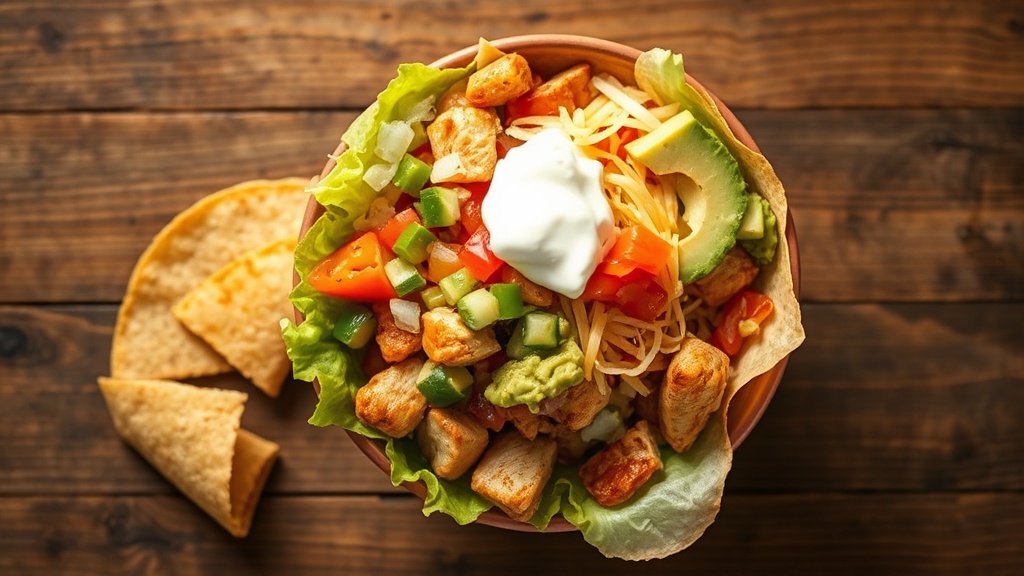
My go-to order:
- Burrito bowl (or salad bowl)
- No rice
- Double chicken
- Fajita veggies
- Fresh tomato salsa (pico)
- Sour cream
- Cheese
- Guacamole
- Lettuce
This is my "I need this to hold me for hours" bowl.
And real talk, this is why I like it: it doesn't feel like diet food. It's savory, creamy, salty, bright, and has enough protein that I'm not scavenging for snacks 90 minutes later.
How Many Carbs Are in This Exact Chipotle Bowl?
Using Chipotle's published ingredient nutrition values, this build lands at approximately:
- 860 calories
- 21g total carbs
- 9g fiber
- 12g net carbs
- 75g protein
- 53g fat
Ingredient-by-ingredient breakdown
- Double chicken (2 x 4 oz): 360 cal, 0g carbs, 64g protein, 14g fat
- Fajita veggies (2 oz): 20 cal, 5g carbs, 1g fiber, 1g protein
- Fresh tomato salsa (4 oz): 25 cal, 4g carbs, 1g fiber
- Sour cream (2 oz): 110 cal, 2g carbs, 2g protein, 9g fat
- Cheese (1 oz): 110 cal, 1g carbs, 6g protein, 8g fat
- Guacamole (4 oz): 230 cal, 8g carbs, 6g fiber, 2g protein, 22g fat
- Lettuce (1 oz): 5 cal, 1g carbs, 1g fiber
If you've seen lower calorie numbers for this same ingredient list, that's usually from one of three things:
- A different portion assumption
- Skipping one high-fat topping (often sour cream or guac)
- Pulling macros from third-party sites instead of Chipotle's official data
As an RD, I always anchor to the official source first, then adjust for real-world scoop variation.
Why Does This Bowl Have More Calories Than People Expect?
Because "low-carb" and "low-calorie" are not the same thing.
I know that sounds obvious, but this trips people up constantly.
This bowl is lower in net carbs while still being high in energy and protein, which is exactly why it's so satisfying. Guac, sour cream, cheese, and double protein all add up quickly. That can be a feature or a bug depending on your goals.
For me, this is a great busy-day lunch when I need staying power. If I'm less hungry or mostly sitting at my desk, I do a lighter version.
What If You Want a Lower-Calorie Version of This Chipotle Order?
Use the same structure, then pull one lever at a time.
My lighter "regular Tuesday" version
- Burrito bowl, no rice
- Single chicken
- Fajita veggies
- Fresh tomato salsa
- Guac or sour cream (pick one)
- Cheese
- Lettuce
Depending on whether you choose guac or sour cream, this usually lands closer to the mid-500s to high-600s for calories while keeping net carbs moderate and protein solid.
My higher-protein post-gym version
- Burrito bowl, no rice
- Double chicken
- Fajita veggies
- Tomato salsa + red salsa
- Cheese
- Lettuce
- Optional guac
That's when I want to push protein and keep carbs tight.
Not gonna sugarcoat this, pun intended: there is no "best" Chipotle bowl. There's the bowl that matches your day.
How Do You Get Crunch at Chipotle Without Eating a Whole Bag of Chips?
This is the tip my readers message me about most.
If you need crunch, ask for one crispy corn taco shell on the side and break pieces into your bowl.
From Chipotle's nutrition data, one crispy corn tortilla is:
- 70 calories
- 10g carbs
- 1g fiber
- ~9g net carbs
A regular chips serving is:
- 540 calories
- 73g carbs
- 7g fiber
- 66g net carbs
So if your brain wants texture (same), the crispy shell trick gives you that crunch hit without auto-piloting into chips-and-guac territory.
What Are the Biggest Hidden-Carb Traps at Chipotle?
If you're tracking carbs closely, these are the usual suspects:
- White rice: 40g carbs
- Brown rice: 36g carbs
- Black beans: 22g carbs
- Pinto beans: 21g carbs
- Roasted chili-corn salsa: 16g carbs
- Chipotle-honey vinaigrette: 18g carbs
- Flour burrito tortilla: 50g carbs
None of these foods are "bad." They're just easy to stack accidentally.
Example: rice + beans + corn salsa + tortilla can put you well north of 100g carbs before you even touch chips. If that's your intentional choice, cool. If it's not, this is where awareness helps.
Is Chipotle Keto-Friendly or Just Low-Carb Friendly?
Both, depending on how you build.
A strict ketogenic approach (usually under ~20g net carbs/day) can work at Chipotle if you skip rice, beans, tortilla, and most higher-carb add-ons.
A more flexible low-carb approach (often ~50-100g/day for many people) gives you room for strategic extras, like corn salsa or half a tortilla, without feeling boxed in.
I sit in the flexible low-carb camp most days because it's more sustainable for normal life. If your clinician gave you a different carb target for diabetes, PCOS, or another condition, follow your care team.
How Should You Use the Chipotle App to Track Macros in Real Time?
This is your data-nerd power move.
When you order in the Chipotle app or online, build your bowl ingredient by ingredient and watch the nutrition update as you add/remove components. It takes 60 seconds and prevents the "wait, why is this meal 1,100 calories" surprise.
What I recommend:
- Add your protein first.
- Add veggies/salsas next.
- Add fat toppings (cheese/sour cream/guac) intentionally.
- Check carbs and protein before checkout.
- Save your order so future-you can reorder in two taps.
This also helps with consistency. If you find an order that keeps you full and fits your goals, repeat it.
How Does Chipotle Compare With Other Fast-Casual Options for Low-Carb?
Short version: Chipotle is one of the easiest because customization is built into the ordering flow.
At burger chains, buns are often default and swaps are clunky. At sandwich shops, bread is the meal structure. At Mediterranean spots, bowls are great but carb-heavy defaults (rice, pita, hummus, falafel combos) can add up fast unless you're watching portions.
Chipotle isn't magically healthier than everything else. It's just easier to steer.
If you want more real-world ordering guides, start with:
- Low-Carb at Olive Garden: What to Order
- Weekly Low-Carb Meal Plan (Under 50g/Day)
- Low-Carb Tortilla Brands Ranked
What Are Easy Chipotle Customizations Based on Your Goal?
If your goal is lower carbs:
- Skip rice, beans, and tortilla
- Use fajita veggies + salsa for volume and flavor
- Keep an eye on vinaigrette and corn salsa
If your goal is higher protein:
- Choose chicken, steak, or barbacoa
- Add double protein
- Keep carb add-ons modest
If your goal is lower calories:
- Stick with single protein
- Choose either guac or sour cream (not both)
- Skip chips/drinks
If your goal is satiety on busy days:
- Keep protein high
- Include one fat source you enjoy
- Add crunch strategically (crispy shell trick)
This is exactly how I think about it in real life. When I'm coming from the gym, I do the bigger protein version. On a normal Tuesday at my laptop, I usually scale it down.
What Are the Most Common Low-Carb Chipotle Questions?
Is Chipotle keto-friendly?
It can be. Build a bowl with no rice, no beans, no tortilla, and focus on protein + low-carb toppings. Most people can keep net carbs fairly low that way.
How many carbs are in a Chipotle bowl without rice?
It depends on everything else you add. My go-to no-rice double chicken bowl with fajita veggies, pico, sour cream, cheese, guac, and lettuce is about 21g total carbs, 9g fiber, 12g net carbs.
Is Chipotle corn salsa low-carb?
Not really. Roasted chili-corn salsa is 16g carbs per serving, so it's easy to push carbs up if you're tracking tightly.
Are beans okay on a low-carb plan?
They can be, depending on your carb budget. Black beans are about 22g carbs per serving. If you're doing flexible low-carb, you might use half portions. If you're doing stricter keto, beans are usually limited.
Is the Chipotle vinaigrette worth it?
Flavor-wise, yes. Carb-wise, it's one to watch: 18g carbs per 2 oz serving. If you love it, use part of it instead of the whole container.
What Should You Do the Next Time You Order Chipotle?
Start with this exact order once so you have a baseline:
- Bowl, no rice
- Double chicken
- Fajita veggies
- Pico
- Sour cream
- Cheese
- Guac
- Lettuce
Then adjust one thing at a time based on your goal and hunger.
Because that is the real strategy, y'all. Not food rules. Not diet shame. Just knowing what you're ordering and making a trade you're okay with.
Now go eat something delicious.
Sources
- Chipotle Nutrition Calculator: https://www.chipotle.com/nutrition-calculator
- Chipotle US Nutrition Facts PDF (March 2025): https://www.chipotle.com/content/dam/chipotle/menu/nutrition/US-Nutrition-Facts-Paper-Menu-3-2025.pdf
This content is for informational purposes only and is not a substitute for professional medical advice. Always consult your doctor or registered dietitian before making significant dietary changes.