Grocery Shopping for Health: How I Feed My Family Low-Carb Without the Diet-Culture Guilt Trip

I want to tell you about the moment I almost turned my kitchen into a cult headquarters.
It was about six months after my PCOS diagnosis, and I was deep in the low-carb internet rabbit hole. I had a spreadsheet. I had tracking apps. I was reading blog posts with names like "ELIMINATE CARBS FOREVER" and considering — genuinely considering — whether I should stop buying rice for the house entirely.
Then Diego came home, opened the fridge, and said, "Babe, where are the tortillas?"
I told him I'd stopped buying flour tortillas because of the carb load.
He looked at me like I had personally dismantled something sacred.
That was the moment I snapped out of it. Because here's the truth: Diego doesn't have PCOS. Luna doesn't have PCOS. I am the one with the metabolic thing that responds to lower carb intake. And making my entire household low-carb because I have a health condition is exactly the kind of diet-culture thinking I was trained to flag as a dietitian — projection of my medical needs onto people who don't share them.
So I rebuilt my grocery strategy from scratch. And this is what actually works.
The Setup (So You Know What You're Working With)
Me: Maya, 34, registered dietitian, PCOS diagnosis at 26. Targeting roughly 50g net carbs per day on most days, higher on weekends or when I'm tired and life happens. (That target was developed with my endocrinologist and my RD brain together — it's not a number I pulled from a forum.)
Diego: High school football coach, 37, no metabolic conditions, metabolism of a 22-year-old, eats everything including the things I make faces at. Has accidentally lost 15 pounds eating my cooking over the past two years, which he finds annoying and I find hilarious.
Luna: 3 years old. Will eat: plain pasta, scrambled eggs, cheddar cheese, and strawberries. That's the full list. We're working on it.
Grocery budget: approximately $480/month for the three of us. All prices I mention are San Antonio, TX approximates as of March 2026 — your market will vary, sometimes a lot.
Department-by-Department: My Actual Grocery Strategy
Net carb values throughout are drawn from USDA FoodData Central. Individual products and brands vary — always check your label.
Proteins (The Non-Negotiables)
This is where I spend the most and where I get the biggest return. The proteins are generally the same for all of us — nobody needs different protein, and this is where low-carb eating is genuinely easy.
Every week, always:
- Eggs (2 dozen) — ~$6. Luna eats them, Diego eats them, I eat them. Net carbs: ~0.4g per large egg per USDA FoodData Central.
- Ground beef (2–3 lbs, 80/20) — ~$12. Goes into taco meat, burger bowls, baked dishes. I personally find higher-fat ground beef more satisfying — the 93% lean stuff has me hungry again in two hours. (That's my experience; fat and satiety responses vary between people.)
- Rotisserie chicken (1–2 birds) — ~$8–$10. This is the most efficient thing in the grocery store. I pull the meat for multiple meals, use the carcass for stock.
- Chicken thighs, bone-in skin-on (2–3 lbs) — ~$7. Cheaper than breasts, more forgiving to cook, higher fat content.
Some weeks:
- Ground pork (~$6/lb) — for carnitas-style dishes
- Salmon (2 fillets when on sale) — I include salmon partly because of omega-3 fatty acids. There's research suggesting omega-3s may help reduce inflammatory markers in women with PCOS, though the evidence is still developing.¹ I'm not calling it a cure; I'm calling it a good reason to eat salmon.
- Canned tuna or sardines — shelf stable protein, good for fast lunches
Produce (Where I Stop Performing for the Low-Carb Police)
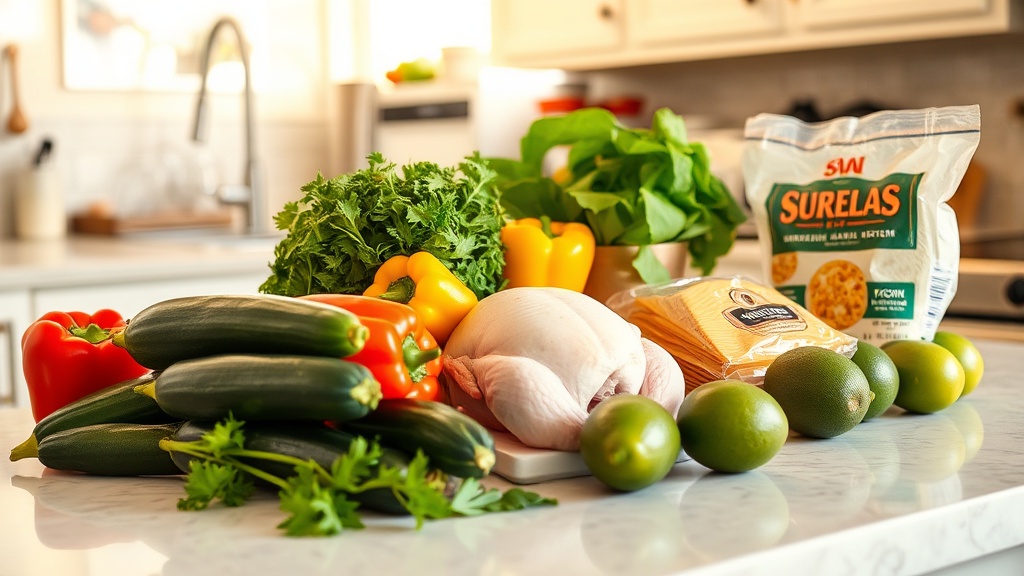
Here's the thing I had to unlearn: not all vegetables are equal on a low-carb plan, but that doesn't mean some vegetables are bad. I buy spinach AND potatoes. I buy zucchini AND corn when it's in season. I'm not afraid of starchy vegetables — I'm just mindful of my serving sizes on the higher-carb ones.
Weekly staples:
- Spinach (large bag) — ~$4. Goes in everything. ~1g net carbs per cup raw (USDA FoodData Central).
- Zucchini (3–4) — ~$3. Best low-carb pasta replacement I've found, and the only one I'll say that about without lying.
- Avocados (4–6) — ~$5–$7. Worth every penny for healthy fat, satiety, and actual flavor.
- Bell peppers (4–5, mixed colors) — ~$5. Versatile, slightly higher in carbs (~4–5g net per medium pepper), but packed with vitamin C.
- Broccoli or cauliflower (1 head each) — ~$5 total. Cauliflower rice is genuinely good in some things. It is not good in everything, and I will not pretend otherwise.
- Regular potatoes (~$3 for a 5lb bag) — I buy these for Diego and Luna. I don't avoid them, I just don't make them my main carb most nights.
- Cabbage (1 head) — ~$2. One of the best value vegetables in the store. Works as a taco topper, a slaw, a stir-fry base.
- Limes (bag) — We're in San Antonio. This is not optional.
Pantry Staples (Buy Once, Use Forever)
- Good olive oil — I spend money here. ~$12 for a decent 16oz. The refined stuff doesn't have the same flavor payoff and you end up using more.
- Full-fat Greek yogurt (large container) — ~$7. I use this as a sour cream replacement (works perfectly), a dip base, and a quick breakfast. ~8–10g net carbs per cup, ~17–20g protein — but this varies significantly by brand, so check yours.
- Almond flour (2lb bag) — ~$10. For low-carb baking when I feel like it. I don't feel like it that often.
- Coconut aminos — ~$8, lasts months. Lower-sodium soy sauce replacement for stir-fries.
- Canned tomatoes and tomato paste — ~$3 total. Net carbs are moderate (~5–7g per half cup crushed per USDA) but the flavor is worth it.
- Bone broth (4–6 cartons or homemade) — if buying, ~$4–$5/carton. I make my own from the rotisserie chicken carcasses when I have time. It's genuinely useful for cooking and I like the flavor depth it adds. (The wellness internet makes a lot of health claims about bone broth; I'm not staking my RD credential on those. I use it because it tastes good.)
- Cheese — all of it. Cheddar, pepper jack, cotija for topping. The whole dairy aisle does not scare me.
The Carbs I Buy (Yes, Really)
- Flour tortillas (for Diego and Luna) — ~$4. Always in the house. I buy them, I just don't eat them most nights.
- Corn tortillas — ~$3. Lower carb than flour (~12g vs ~22g per tortilla, though this varies by brand and size), and the taste difference is significant for tacos. I use these when I want a tortilla.
- White rice (large bag) — ~$6. Luna's primary carb source. Diego puts it next to everything. I make a small amount for them and eat mine with cauliflower rice on the side, no drama.
- Low-carb tortillas (Mission Carb Balance or similar) — ~$5. I keep these for when I want a real wrap. Fair warning: they're not as good as flour tortillas. I know it. They're still useful.
- Oats (regular, not the instant kind) — ~$4. Diego eats these most mornings. I don't, but they're in the house.
How We Actually Eat Together (Without Anyone Being Miserable)
The secret to family meals when you're eating differently isn't elaborate parallel cooking. It's designing recipes where the base is the same and the add-ons are what differ.
Taco Night
I make the taco meat — ground beef with cumin, chili powder, garlic, and a splash of chicken broth so it doesn't dry out. It takes 15 minutes.
- Luna gets hers: small amount of meat, cheddar cheese, on a flour tortilla. Cut in fourths because she's 3.
- Diego gets his: meat, cheese, pico, jalapeños, on flour tortillas, rice and beans on the side.
- I get mine: meat, cheese, avocado, sour cream, on cabbage leaves or a corn tortilla depending on my carb count for the day.
One pot of meat. Three configurations. Everyone eats together. Nobody lectures anyone.
My estimated macros for 3 corn tortilla tacos with full toppings: approximately 28g net carbs, 35g protein, 22g fat. (These are estimates based on standard ingredient weights — track your own brands if precision matters to your plan.)
Sheet Pan Chicken Thighs with Roasted Vegetables
This is a whole-family meal that's naturally lower carb and genuinely everyone's favorite.
Season bone-in, skin-on chicken thighs with olive oil, garlic, cumin, smoked paprika, salt. Surround with zucchini, bell peppers, onion, and a handful of cherry tomatoes. 425°F for 35–40 minutes.
I serve this with no base for me, with rice on the side for Diego and Luna (made separately in the rice cooker, zero extra effort on my part).
My estimated macros: approximately 10g net carbs, 40g protein, 28g fat. Diego gets the same thing with rice and calls it his "healthy dinner."
The Luna Side + Maya Side Situation
Luna will eat: scrambled eggs, shredded cheese, sliced strawberries.
Some nights, that's her dinner. It's nutritionally fine for a 3-year-old, her pediatrician is not concerned, and fighting it uses energy I don't have.
My version of the same energy: two eggs scrambled in butter, half an avocado, cotija cheese, hot sauce. Takes 5 minutes. Estimated net carbs: approximately 4g. Protein: ~14g. Satisfaction level: high.
The Real Economics
Something that comes up in my DMs constantly: "Low-carb eating is expensive."
Sometimes it is. I won't pretend the almond flour isn't annoying.
But here's the other side of the math — and I want to be clear this is my personal situation, not a projection of what your numbers will look like.
Before my PCOS was well-managed, I was personally spending approximately:
- ~$180/year on metformin (my specific prescription at my specific pharmacy — medication costs vary enormously by insurance, dosage, and location)
- 4–6 gynecologist and endocrinologist visits per year at $40–$80 copay: up to $480/year
- Lost work productivity from brain fog and fatigue: harder to calculate, but I felt it
After making dietary changes (including, but not limited to, lower carb intake — under my doctor's supervision):
- My personal medication was reduced to once-daily (doctor-supervised), which lowered my out-of-pocket costs
- My visit frequency reduced to twice-yearly maintenance
- My brain fog improved substantially — I subjectively felt sharper
I'm telling you this as my story, not as a clinical outcome you can bank on. PCOS is a lifelong condition, my results were developed alongside my care team, and your experience will be different. The general point stands: the upfront cost of a supportive grocery strategy can sometimes offset downstream costs. That's worth factoring into your math.
Monthly Grocery Breakdown (San Antonio, TX — March 2026)
| Category | Monthly Budget |
|---|---|
| Proteins (meat, eggs) | ~$130 |
| Produce | ~$80 |
| Dairy (cheese, yogurt, butter) | ~$45 |
| Pantry staples (oils, spices, canned goods) | ~$60 |
| Family carbs (rice, tortillas, oats, pasta) | ~$35 |
| Low-carb specific items (almond flour, low-carb tortillas) | ~$30 |
| Miscellaneous | ~$100 |
| Total | ~$480 |
These are my actual approximate numbers for a family of three in San Antonio as of early 2026. National averages and costs in higher-COL cities will differ. The structural point: the "low-carb specific" line is $30. That's the actual premium I pay for my specific dietary approach. The rest is just food.
A Note, Because I'm an RD and I Have To Say It
As a registered dietitian, I recommend consulting your own RD or doctor before making major dietary changes, especially if you have PCOS, diabetes, insulin resistance, or take any medication. The net carb targets I use are specific to my body, my PCOS management plan, and were developed with my own medical team. Your targets may be completely different. This is not a prescription.
PCOS is not one thing. Some women are primarily dealing with insulin resistance. Some are dealing with androgen-related symptoms. Some have both. The 2023 international PCOS guidelines acknowledge that dietary modification — including attention to glycemic load — can be part of a comprehensive management approach for those with metabolic features, but those guidelines also emphasize individualized care.² What works for my presentation of PCOS doesn't automatically work for yours. The specific macros are between you and your care team.
The One Thing I Actually Want You to Take Away
The low-carb internet wants you to believe that managing your carb intake requires a complete lifestyle overhaul, new social norms, and the willingness to make your family eat whatever you eat.
It doesn't.
It requires a reasonably thoughtful grocery list, one sentence of context when you're cooking ("I'm going to have mine on cabbage, you take the flour tortillas"), and the ability to not make your health condition everybody else's problem.
Diego eats whatever he wants. Luna eats pasta and strawberries. I eat in a way that manages my PCOS. We eat dinner together every night.
That's it. That's the whole system.
Sources
¹ Khani B, et al. "Effect of omega-3 fatty acid supplementation on the quality of life and hormonal indices in patients with polycystic ovary syndrome." Journal of Research in Medical Sciences, 2011. Note: Evidence on omega-3s and PCOS inflammation is promising but not conclusive; research is ongoing.
² Teede HJ, et al. "Recommendations from the 2023 international evidence-based guideline for the assessment and management of polycystic ovary syndrome." Fertility and Sterility, 2023. https://doi.org/10.1016/j.fertnstert.2023.07.025
Net carb values: USDA FoodData Central (https://fdc.nal.usda.gov/). Individual product values vary by brand and preparation — always verify against your label.
Maya Reyes is a registered dietitian and the founder of Carb Conscious. She lives in San Antonio with her husband Diego and daughter Luna, who has extremely strong opinions about which four foods are acceptable.