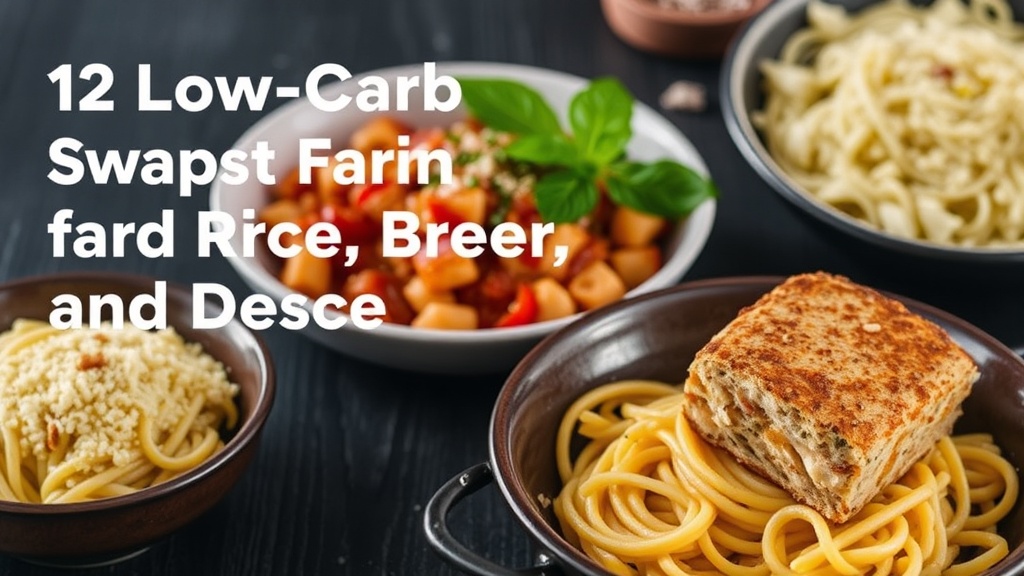
12 Low-Carb Swaps for Pasta, Bread, Rice, and Dessert That Work

Most people assume that cutting carbs means signing a contract with boring food—plain chicken, dry salads, and a lifetime of saying "no thanks" to comfort food. That couldn't be further from the truth. The real issue isn't that low-carb eating lacks variety. It's that most people don't know which swaps actually work, so they try one soggy cauliflower crust, declare the whole approach a failure, and go back to their old habits. Here's what nobody tells you: low-carb comfort food isn't about perfect replicas. It's about finding alternatives that satisfy the same cravings—crunchy, creamy, chewy, warm—without the carb load that sends your blood sugar soaring. When you stop expecting almond flour to behave exactly like wheat flour, and when you learn a few technique tweaks, suddenly grilled cheese, mashed potatoes, and chocolate cake are back on the menu.
Why Do Most Low-Carb Substitutes Taste Like Cardboard?
Walk down the "diet" aisle of any grocery store and you'll find no shortage of low-carb products promising to taste "just like the real thing." Most of them lie. The cauliflower pizza crust that arrives frozen in a box often steams into a limp, flavorless disc in your oven. Almond flour cookies can taste sandy and fall apart before they reach your mouth. Shirataki noodles smell like fish straight from the bag—and if you don't treat them right, they keep that smell through dinner. The problem usually isn't the ingredient itself. It's that manufacturers (and home cooks) try to force one food to impersonate another instead of letting it be its own thing.
The best low-carb swaps start with whole ingredients and realistic expectations. Cauliflower will never have the gluten structure of wheat, but it can create a crispy, savory crust when you rice it fine, squeeze every drop of moisture out through a clean towel, mix it with cheese and egg, and bake it on high heat. Almond flour lacks gluten's elasticity, but it brings richness and fat that wheat can't match—perfect for dense, fudgy brownies or moist muffins. Understanding the properties of your substitute ingredients is half the battle. The other half is seasoning aggressively. Starches carry a lot of bland bulk in traditional recipes. When you remove that bulk, you need to compensate with salt, acid, fat, and aromatics so the final dish doesn't taste flat.
Can You Make Mashed Potatoes Without a Single Potato?
Yes—and the answer goes way beyond basic cauliflower mash. Cauliflower alone can turn watery and one-note if you simply boil and blend it. The fix is building layers of flavor and texture. Roast a whole head of garlic and squeeze the soft cloves into your mash. Add cream cheese, sour cream, or grated Parmesan for richness. A pat of cold butter folded in at the end adds a velvety finish that mimics the luxurious mouthfeel of traditional mashed potatoes.
For an even closer match, try celeriac—also called celery root. It boils and mashes into something remarkably fluffy, with an earthy, slightly nutty flavor that stands up to gravy and butter. Turnips are another underrated option. When peeled, boiled until tender, and mashed with heavy cream and plenty of salt, they become silky and mild. Many tasters can't distinguish turnip mash from the real thing in a blind test—especially when you mix in chives or roasted garlic. Want the best of both worlds? Combine half cauliflower and half celeriac. You get the light texture of cauliflower with the body and depth of celery root, all for a fraction of the carb count of russets. The Mayo Clinic points out that successful low-carb eating depends on choosing nutrient-dense foods rather than simply avoiding carbohydrates.
What Pasta Alternatives Hold Up to Real Italian Sauces?
Zucchini noodles are the entry-level pasta swap, but they come with a well-known flaw: water. Raw zoodles start releasing moisture the second hot marinara hits the bowl, turning your carefully constructed dinner into soup. The solution is two-step preparation. First, spiralize your zucchini and toss it with a generous amount of salt. Let it sit in a colander for 20 minutes, then squeeze out the liquid with a clean kitchen towel. Second, sauté the noodles in a hot pan with olive oil for just one to two minutes—no longer. They won't have the exact bite of al dente spaghetti, but they'll be tender, flavorful, and sauce-friendly.
For a more convincing pasta experience, try hearts of palm noodles. They come pre-cooked, have a neutral taste, and actually twirl around your fork like spaghetti. Their texture is firmer than zucchini and they don't release water, which means your carbonara stays creamy instead of diluted. Konjac-based shirataki noodles are another solid choice when prepared correctly. Rinse them thoroughly under cold water, then dry-fry them in a nonstick pan—no oil—until they squeak and start to evaporate their excess moisture. Only then do you add sauce. The noodles will absorb flavor instead of diluting it. For lasagna, skip the noodles entirely and use thin sheets made from egg yolks, cream cheese, and a little Parmesan, baked into flexible layers. The result is rich, layered, and deeply satisfying. The American Diabetes Association emphasizes that understanding total carbohydrates and fiber helps you make smarter substitution choices.
Is There a Low-Carb Bread That Doesn't Crumble?
Cloud bread—made from whipped egg whites, cream cheese, and cream of tartar—had a moment on social media for good reason. It's soft, pillowy, and genuinely bread-like in flavor. The downside? It's fragile. You can't stuff it with thick sandwich fillings or toast it without some casualties. For a sturdier option, 90-second mug bread made from almond flour, an egg, and melted butter cooks in the microwave and firms up as it cools. It slices well, holds condiments, and makes a decent breakfast sandwich base.
Store-bought low-carb bread has improved significantly, though label-reading is a must. Some brands use modified wheat starch to reduce net carbs while keeping a traditional texture—but that starch can still impact blood glucose. Better options rely on almond flour, coconut flour, or psyllium husk as their base. Psyllium-based breads are particularly impressive because they brown, toast, and even develop a slight crust. Chaffles—cheese waffles made from egg and shredded cheese in a mini waffle maker—have earned their cult following honestly. A basic chaffle works as a burger bun or breakfast sandwich holder. Add a spoonful of almond flour and a pinch of baking powder, and you get something even more bready and structurally sound. It won't fool an artisan bread enthusiast, but it will deliver a grilled cheese that crisps in butter and stretches with melted cheddar—and that's the whole point.
Which Rice Swaps Won't Ruin Your Stir-Fry?
Cauliflower rice dominates the conversation here, but preparation makes or breaks it. The biggest mistake people make is steaming it or covering it while it cooks, which traps moisture and creates mush. Instead, heat a large pan until it's very hot, add a thin layer of oil, and spread the cauliflower rice in an even layer. Let it sit undisturbed for a minute so it develops some color and nutty flavor, then toss and repeat. The whole process should take three to four minutes. Season it with soy sauce, sesame oil, ginger, and garlic, and you've got a stir-fry base that soaks up sauces without turning to porridge.
For a chewier, more substantial grain-like experience, try riced hearts of palm. It has a neutral flavor and a firm bite that stands up to heavy sauces better than cauliflower. You can also make mushroom rice by pulsing button or cremini mushrooms in a food processor until they reach a rice-like consistency, then sautéing them until they release their moisture and brown slightly. The result is intensely savory and pairs beautifully with Asian flavors. Lupin rice—made from lupini beans—is another rising star. It's high in protein, low in carbs, and has a firm texture that won't disintegrate in a curry or jambalaya. Each of these options brings something different to the table, so the "best" choice depends on what you're cooking.
Can You Actually Bake Desserts Without Sugar and Flour?
You absolutely can—but you need to respect the chemistry. Almond flour and coconut flour are the foundation of most low-carb baking, and they behave nothing like all-purpose flour. Almond flour adds fat and moisture, producing dense, rich cakes and fudgy brownies. Coconut flour is extremely absorbent—one-quarter cup can soak up as much liquid as a full cup of wheat flour—so recipes using it need extra eggs and plenty of liquid. You cannot swap these flours one-to-one for wheat flour, and you usually can't substitute them for each other without adjusting the entire recipe.
Sweeteners are another learning curve. Erythritol measures like sugar but can create a cooling sensation on the tongue and may recrystallize in baked goods. Monk fruit extract is intensely sweet with no aftertaste when blended with erythritol. Allulose is the current favorite among low-carb bakers because it browns, caramelizes, and behaves almost exactly like sugar in cookies, sauces, and ice cream. A simple chocolate mug cake—stirring together almond flour, cocoa powder, an egg, a little sweetener, and a pat of butter, then microwaving for 60 seconds—can fix a craving faster than a trip to the bakery. For something more elegant, a flourless chocolate torte made from dark chocolate, butter, eggs, and sweetener is so rich and decadent that nobody at the table asks about macros. Johns Hopkins Medicine notes that focusing on whole food sources of fats and proteins creates more sustainable eating patterns than relying on heavily processed low-carb products.
The best low-carb comfort food doesn't pretend to be something it's not. A zucchini noodle will never be spaghetti—but it can deliver a saucy, slurpy, deeply satisfying bowl if you stop comparing them. Cauliflower rice isn't jasmine rice, but it can carry the same flavors and textures that make fried rice comforting. The secret is redirecting your cravings rather than restricting them. You still get the crunch of toast, the creaminess of mashed potatoes, the chew of noodles, and the richness of chocolate cake. You just arrive at those sensations through a different route—one that keeps your blood sugar steady and your hunger in check. Pick one swap that sounds appealing. Learn its quirks. Cook it a few times until it becomes second nature. Then try another. That's how low-carb eating stops feeling like a diet and starts feeling like a kitchen full of possibilities.